Olivia is the Head of Legal at Lawpath, where she helps Australian businesses navigate complex legal challenges with practical, commercially minded advice. She specialises in employment matters, contract drafting, pre-litigation strategy, dispute resolution, commercial law and startup compliance, and has supported clients across technology, healthcare, professional services and retail. Olivia is passionate about making legal services accessible, personable and effective for every client.
💡 Key Insight
- Legal requirements for starting a retail business in Australia must be completed before opening your doors, because physical premises, walk-in customers, stock, and staff create higher upfront legal and compliance risks than online-only businesses.
- Choosing the right business structure for a retail business determines who is legally responsible for debts, leases, and claims, making early decisions critical for liability protection, financing, and long-term scalability.
- A common mistake when starting a retail business is signing a lease or trading before securing proper registrations, licences, and council approvals, which can lead to fines, forced closure, or costly renegotiation.
- Putting essential retail legal documents in place early, including leases, supplier agreements, employment contracts, and consumer policies, reduces disputes, supports compliance, and protects the business as soon as trading begins.
Retail businesses in Australia carry more upfront legal risk than many online or service‑only ventures. Why? Because you are dealing with walk‑in customers, physical premises, stock, and staff from day one.
As a result, you’ll need to complete several key legal and compliance steps before you open your doors, not after you start making sales.
This guide focuses on the legal requirements for starting a retail business in Australia, so you can be sure your foundations are compliant.
Table of Contents
1. Choose a business structure that lets you trade legally
The business structure you choose affects who is legally responsible for debts, how you sign leases and contracts, and what kind of ongoing compliance applies.
In Australia, most small retail owners start as sole traders, partnerships, or companies. Each option has different implications for liability and risk.
Getting this wrong early can make it harder to bring in partners, raise finance, or limit your exposure if something goes wrong in the shop. So, let’s take a look at each structure in more detail so you can pick the one that’s right for you.
Sole trader
A sole trader is the simplest way to operate a retail business, because the owner and the business are the same legal entity.
You control decisions and profits directly, which simplifies things. That said, you are also personally responsible for shop debts, supplier accounts, leases, and any legal claims against the business. This means your personal assets may be at risk if the business cannot pay its debts.
Partnership
In a partnership, two or more people run the retail business together and share income, control, and legal responsibility. In this case, partners are generally jointly responsible for debts, claims, and obligations incurred in the course of the business.
Because of this shared liability, you should have a written partnership agreement covering contributions, decision‑making, dispute resolution, and what happens if someone leaves.
Company
A company is a separate legal entity, which means the business (not the individual owners) signs contracts, holds the lease, and employs staff.
This separation helps limit liability for retail businesses with employees, multi‑year leases, and a high level of public interaction. Even so, directors still have duties under the Corporations Act 2001.
Despite the above benefits and easier scalability, you’ll need formal registration and more complex compliance to set up a company.
2. Register your retail business properly
Once you’ve decided on your business structure, but before you start trading, you’ll need to go through the process of registering your business. This ensures that government agencies, suppliers, and customers can identify who they are dealing with.
Here are the key legal registration requirements for retail businesses.
| Registration Type | When Required | Key Notes |
| Business Name | If trading under a name other than your own | Costs ~$42 for 1 year or ~$98 for 3 years (as of 2026) |
| Company Registration | If choosing a company structure (Pty Ltd) | Ongoing ASIC fees and annual review required |
| ABN (Australian Business Number) | Almost all businesses | Takes ~10-20 minutes; sole traders/partnerships get it instantly |
| GST Registration | Compulsory if annual turnover ≥$75,000 | Must charge 10% GST on most retail sales; claim input credits; quarterly BAS reporting |
| Licenses and permits | For most physical retail businesses | Vary by state and local regulations |
Business name and entity registration
If you are planning to start a company, you’ll first need to register with the Australian Securities and Investments Commission (ASIC) and get an Australian Company Number (ACN).
You may also need to register a business name, as most retail shops operate under a brand. You can skip this step when you operate under your personal name alone (for example, “Alex Jones”).
Note that registering a business name alone doesn’t create a separate legal entity or provide trademark protection.
ABN, GST, and tax registrations
Almost all retail businesses require an ABN to invoice, deal with suppliers, and register for other taxes. You can apply for an ABN through the Australian Business Register. Once you’ve obtained the number, you can also register for Goods and Services Tax (GST) and other obligations with the Australian Taxation Office (ATO).
GST registration is compulsory if your business turnover is at or above the current threshold (generally $75,000 per year). Failing to register will result in breaching the law and possible penalties, so pay close attention to your turnover as you start out.
Check retail business licences, permits, and local approvals
Licensing and permit requirements for retail businesses vary across states, territories, and local council areas, so there is no single national list that applies to every shop.
Your location, the type of goods you sell, and how you fit out and use the premises can all trigger different legal approvals. Checking what you need early helps you avoid enforcement action or delays just before opening.
Council permits and zoning
Local councils control zoning, land use, building approvals, and certain types of signage and fit‑outs in their area. Before signing a lease or investing in shopfitting, you should confirm that you can use the premises for retail. You’ll also need to check that the council will approve any changes you plan (such as external signage or structural works).
Councils may also impose conditions, such as parking requirements, trading hours, or limits on how you can use your premises, which you need to factor into your business plan.
Industry‑specific requirements
Depending on what you sell, you might need to meet additional legal requirements. This is particularly true for products that have restrictions for health, safety, or age reasons.
For example, retail food outlets must comply with food safety standards. Meanwhile, businesses that sell alcohol, tobacco, or other regulated goods generally need specific licences and must meet strict responsible service obligations.
As you can see, licenses and permits are very case-specific. It’s best to check your obligations with the relevant state or territory regulator. You can turn to tools such as the Australian Business Licence and Information Service (ABLIS) to confirm exactly what your business needs to stay compliant.
3. Secure your premises the right way
Your retail premises are usually one of your highest costs and legal exposures, because leases can lock you into multi‑year commitments and make you responsible for ongoing outgoings.
The type of lease you sign and its structure affect your rights to remain on the premises, how your rent can be reviewed, and what happens if things go wrong.
Retail vs commercial leases
As a retail business, you’ll usually sign a retail lease. The good news is that specific state and territory shop lease laws protect retail tenants, especially in shopping centres and traditional high‑street environments.
These laws can affect issues like disclosure obligations, recovery of outgoings, limits on certain landlord costs, rent review processes, and dispute resolution options.
In contrast, commercial leases rely heavily on negotiation and contract terms. They may provide fewer default protections without careful review and tend to target business offices rather than retail operations.
Why legal review matters before signing
A retail lease usually commits your business to paying rent, outgoings, and other costs for a fixed term, sometimes with options that can extend your obligation for many years.
Landlords commonly require personal guarantees from small business owners, especially where a new company is the tenant. This could expose your personal assets if the business can’t meet its obligations.
For this reason, you should factor in key clauses on exit, make‑good, rent reviews, and permitted use. If these don’t include proper protections, you may face costly disputes.
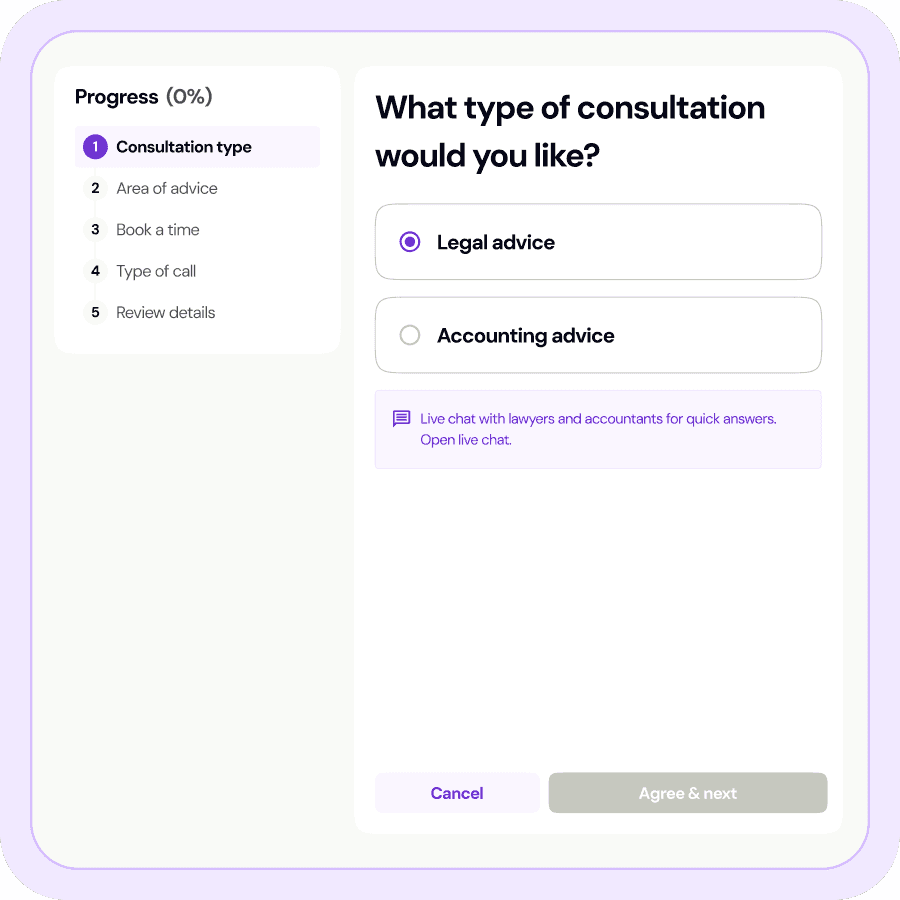
It’s best to have a good lawyer review the lease before signing, so you can understand the risks and negotiate fairer terms.
4. Put essential legal documents in place
Beyond registrations and licences, your retail business needs core legal documents to manage relationships with suppliers, staff, and customers.
Supplier and service agreements
Many retailers start with informal arrangements, relying on emails or verbal conversations with suppliers and service providers. This makes it harder to enforce delivery timeframes, quality standards, credit terms, and what happens when a supplier fails to deliver stock during peak periods.
Clear written supplier agreements cover:
- Pricing
- Payment terms
- Delivery and risk
- Exclusivity (if any)
- Termination rights
Having formal agreements in place from the start can reduce disputes and support consistent stock and service levels.
Employment basics
If you employ staff, you must comply with Australian workplace laws, including the Fair Work Act, relevant modern awards, and work health and safety obligations.
Written employment agreements set out key terms, including:
- Work duties
- Hours
- Pay
- Confidentiality
- Benefits
- Termination
- And more
Any such agreement must align with the correct award and minimum standards. Getting classification, pay rates, penalty rates, and entitlements wrong creates a real risk of underpayment claims, penalties, and reputational damage.
Consumer and privacy obligations
Consumer law around retail businesses sets rules about consumer guarantees, misleading conduct, pricing, and refund or return rights. To comply, you need clear policies on:
- Refunds
- Returns
- Warranty claims
- Lay‑by (if applicable)
- Price advertisement and promotions
Additionally, if you collect customer information (for example,e3 through loyalty programs, online ordering, or email marketing), you’ll also have privacy obligations. This will require a privacy policy that outlines how you store data, use it, and how you respond to access or marketing opt‑out requests.
Final legal checklist before opening day
Use this quick checklist to confirm your core legal requirements are in place before opening the doors of your retail business.
- Structure chosen and registered: You have decided on a sole trader, partnership, or company structure and completed any required ASIC registrations.
- ABN and tax registrations complete: You have an ABN and, if required, are registered for GST and other relevant ATO obligations.
- Licences and permits checked: You have confirmed council zoning and approvals, and any industry‑specific licences or permits (such as food or liquor) are in place or in progress.
- Lease reviewed and signed correctly: You understand your lease type (retail or commercial), you know your rent and outgoings, and you (or a lawyer) have reviewed the agreement so you understand your rights and obligations.
- Key contracts in place: Supplier agreements, key service contracts, and any other important arrangements are documented in writing with clear terms.
- Employment compliance ready: You’ve prepared employment agreements, award classifications, pay rates, and workplace policies (including safety) before staff start work.
FAQs
Can I start trading while waiting for approvals?
In many cases, you must obtain certain approvals before opening the doors or beginning certain activities, especially for food, alcohol, or other regulated goods.
Trading without required licences, permits, or zoning approval can lead to fines, forced closure, or the imposition of conditions on your business.
Do online and physical retail businesses have the same legal requirements?
Online and bricks‑and‑mortar retailers share many core requirements, including choosing a structure, registering a business name, getting an ABN, and complying with consumer and privacy laws.
However, physical stores face additional obligations regarding premises, leases, local council approvals, and on‑site safety, while online retailers focus more on website terms, digital data handling, and logistics. Both models must meet the same baseline legal standards.
Start a fully compliant retail business with Lawpath
Starting a fully compliant retail business does not have to be overwhelming when you have the right legal support. Lawpath offers affordable legal documents, guidance on registrations, and access to lawyers so you can tick off the essentials and focus on serving your customers. Speak to our team today or sign up for free to get started.