"Well begun is half done."
— Ancient Greek proverbMost problems in business don't arrive suddenly.
They build quietly. A clause buried in a contract. A tax obligation misunderstood. A compliance deadline missed. A structural decision made too quickly.
Individually, these things seem small. Together, they determine whether a business survives.
Over the past decade we've spoken to thousands of founders, and one pattern appears again and again: Businesses rarely fail because of bad ideas. They fail because the operational foundations of the company were never properly set.
Over ten years ago, we started Lawpath because we believed something simple: Starting a business should not require becoming an expert in bureaucracy. Legal systems, tax systems and regulatory frameworks exist for good reason. But for most founders they are opaque, fragmented and expensive to navigate.
So we set out to build something different: A platform that makes the hardest parts of running a business easier.
Over the last decade, more than 650,000 businesses have used Lawpath to start or run their companies. During that time we've seen countless moments where the right advice at the right time changed the trajectory of a business.
According to the Australian Bureau of Statistics, the average three-year survival rate of Australian small businesses is about 51%. For businesses using Lawpath, that number rises to 64%.
We can't take full credit for our customers' success, but we do know something important:
Businesses that deal with the hard things early — legal, tax and compliance — tend to last longer. As the old proverb reminds us, well begun is half done.
At the same time, something bigger is happening. Australia is entering what we believe is an entrepreneurial super-cycle.
Over the past few years, new business formation has surged across the country. Record numbers of Australians are registering businesses, experimenting with new ideas, and choosing entrepreneurship as a path to independence.
What's different this time is who is starting businesses and how they are doing it. A new generation of founders — younger, more diverse, and deeply comfortable with technology — is emerging. Many of them are building companies that look very different from traditional small businesses.
They are:
New ABN registrations by year
Source: ABR Web Services
The result is a structural shift in the economy. Instead of relying solely on large incumbents, economic growth is increasingly being driven by thousands of agile, technology-enabled small businesses.
Entrepreneurship is becoming an increasingly core engine of the Australian economy, but this shift creates a new challenge. If the number of businesses grows dramatically, the systems that support those businesses need to evolve too. And that's where we come in.
When we started, the focus was simple: make legal help accessible to small businesses.
But the more businesses we spoke to, the clearer it became that legal documents were only one part of the problem. Founders didn't just want legal support. They wanted to feel confident that the operational side of their business was under control.
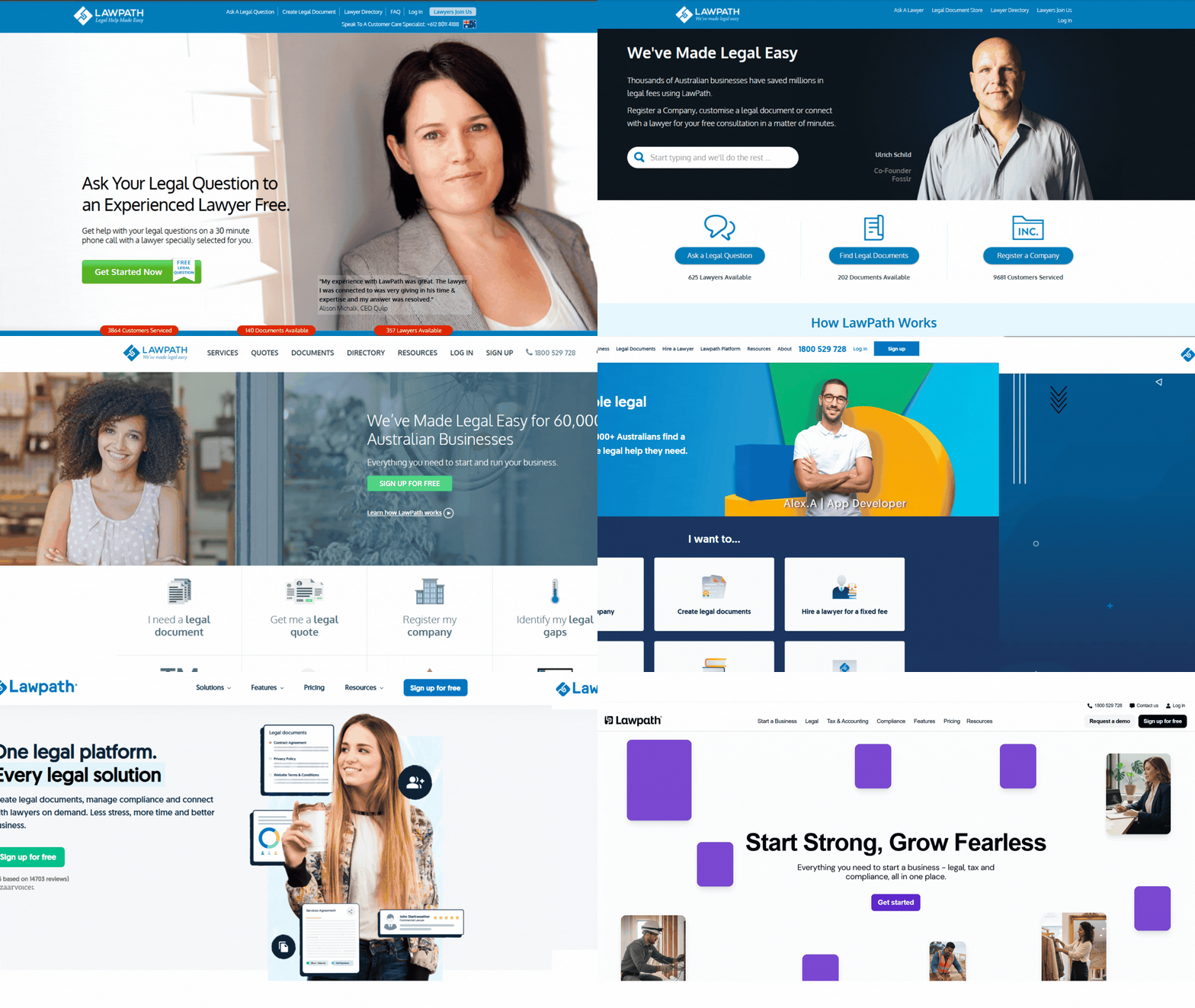
So we expanded. Company registration. Legal documents. Compliance monitoring. Tax and accounting services. Access to advisors.
A platform that lets a founder register a company, generate their shareholders agreement, track their ASIC obligations, lodge their BAS, and book an employment lawyer — in the same place, with context already intact across every service.
That expansion is also why we rebranded. The visual identity, the positioning, the way we talk about what we do — all of it needed to catch up with what Lawpath had actually become.
Artificial intelligence is transforming professional services. Tasks that once took hours — research, drafting, analysis — can now happen in seconds. Goldman Sachs estimates that 48% of legal and compliance tasks will be replaced by AI. In 2025 alone, over $100 billion was invested in legal and compliance AI tools globally.
For founders, this is incredibly powerful.
But AI also exposes an important limitation. AI can provide answers. It can explain legal concepts. Draft a document. Summarise a regulation. But running a business requires something more than answers. It requires execution.
Registering companies. Lodging filings. Monitoring compliance. Seeking professional advice.
We've seen this firsthand. Businesses can now prepare a BAS in a fraction of the time. Contracts can be instantly generated. And problems that would have gone unnoticed — an expiring clause, a missed deadline, a compliance gap — can be caught before they cost anything at all.
AI is our accelerant. And that insight shaped the next chapter of Lawpath.
Today we're introducing Lawpath Atlas.
Atlas is an AI operating system designed specifically for small businesses. Instead of waiting for founders to ask questions, Atlas continuously monitors the operational health of a business across legal, tax, compliance and financial signals. When it detects a risk or opportunity, it acts.
Sometimes it means preparing a compliance task. Sometimes that means drafting a document. Sometimes it simply means warning a founder about something important before it becomes a problem.
We haven't designed Atlas to replace professionals — we actually believe it will make them significantly more effective. AI handles the routine work. Lawyers and accountants focus on the complex decisions where judgement matters. The result is something founders have rarely had access to before: the speed of AI combined with the reassurance of human expertise.
Atlas runs on top of a data engine we call the Lawpath Cortex — built from more than a decade of interactions between businesses, lawyers, accountants and regulators.
The goal is simple: Turn the operational complexity of running a business into something that increasingly runs itself.
You can read more about Atlas in this brilliant post from my co-founder Dom here.
Small businesses have always been the backbone of the Australian economy. And the next decade will likely see more entrepreneurs than ever before.
Technology (particularly AI) will remove many of the barriers that once made starting a business difficult. But founders will still need trusted systems to handle the complexity behind running a company.
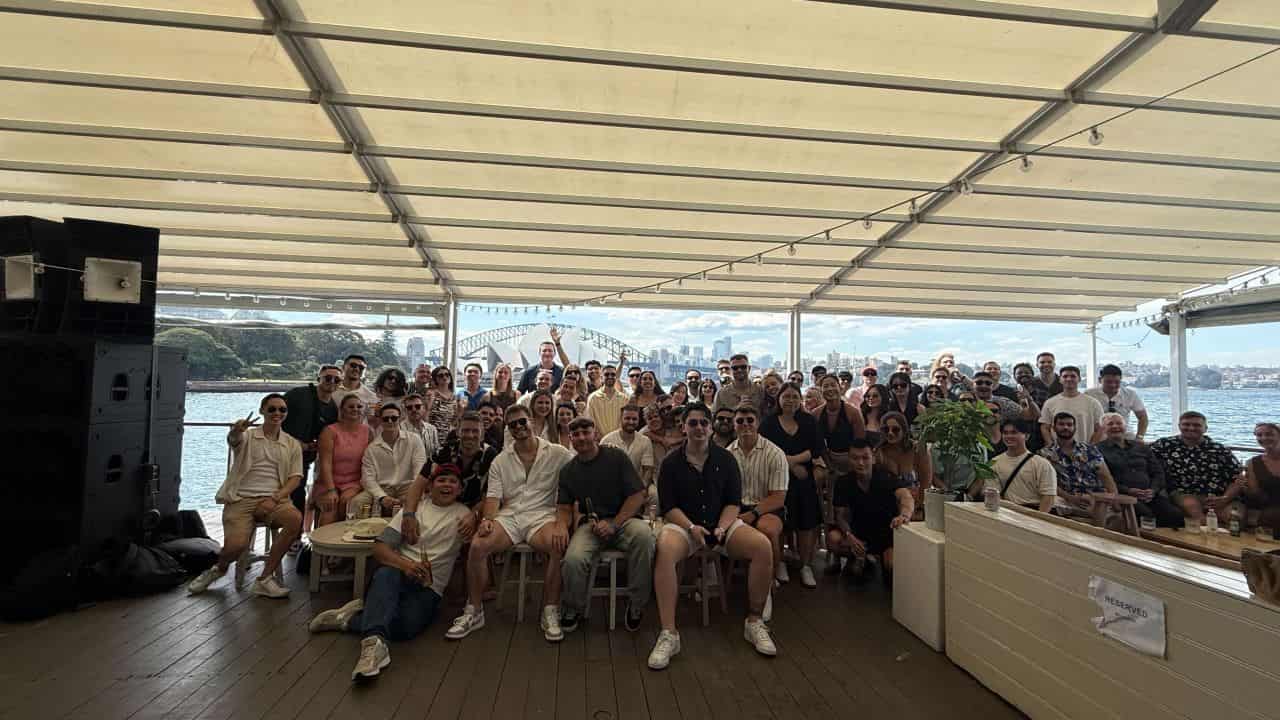
Our mission remains the same as it was ten years ago: Help entrepreneurs start strong and build businesses that last.
The difference today is that we now have the platform, the data and the technology to support that mission at a scale we could only imagine when we started.
The rebrand marks the beginning of the next chapter. And with Atlas, we're excited to help power the next generation of Australian businesses.