
Heads of Agreement
A Heads of Agreement is a non-legally binding pre-cursor document that you can use during the negotiation stage to record proposed terms of two parties.
Last updated October 23, 2025
Suitable for Australia
Trusted by Over 650,000 Australians







Up-to-date compliance with regulations
Up-to-date compliance with regulations
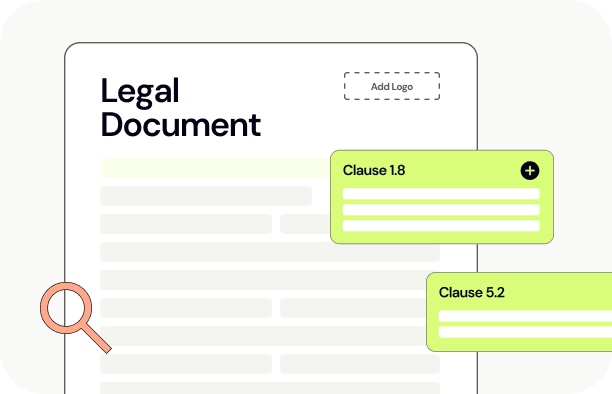
Laws and regulations are continually evolving, and failure to comply can result in severe consequences for businesses. Our Heads of Agreement is constantly updated by legal professionals to ensure it stays up-to-date with the latest laws and regulations in Australia.
Advanced Al for Personalised Heads of Agreement
Advanced Al for Personalised Heads of Agreement
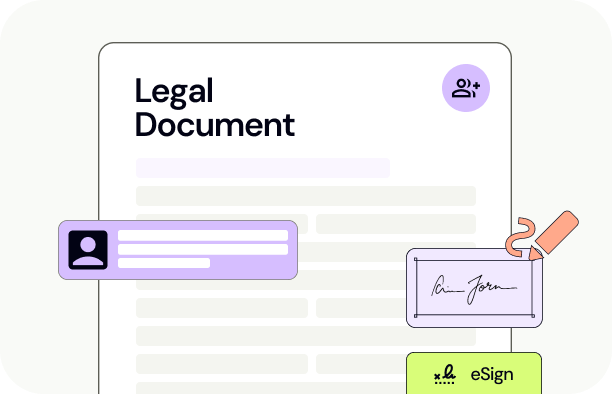
Leveraging advanced Al technology and guided questionnaires, we ensure the Heads of Agreement is customised to meet the unique needs and specific requirements of your business.
Efficiency and Convenience
Efficiency and Convenience
With a few clicks and by answering a guided questionnaire, we incorporate your responses into a professionally drafted Heads of Agreement in under 5 minutes.
How it works
Follow the steps below and you'll have your ready-to-use document in no time

STEP 01
Set up a free account

STEP 02
Search and find the document you need from our list

STEP 03
Follow the prompts and fill in all the relevant details

STEP 04
View and share your ready to use legal document
Document Overview
When two parties enter into negotiation for an agreement, such as the sale of a business, the parties should seek to formalise the terms of the discussion prior to signing a legally binding document. This gives the parties a chance to process what fulfilling the terms of the contract will mean, and clarify anything before it is too late to make changes. If you are interested in signing an agreement with another party, it is important to record the terms that have been agreed upon in order to protect your business assets and resolve future disputes. It works as an 'agreement to agree', however is not a legally binding contract. If the proposed agreement has a signed paper record, you are able to ensure that the execution of a legally enforceable document is smooth and minimises any potential conflict.
Meet Our Users
Use this Heads of Agreement if:
- You would like to set out the proposed terms of an agreement between you and another party during the negotiation stage before a formal agreement is made.
- You would like to set out in writing the intention of the parties moving forward.
What does the Heads of Agreement cover?
- Details of the proposed formal agreement;
- Obligations of both parties;
- Consideration for the proposed agreement; and
- Options to include clauses for confidentiality, intellectual property, non-solicitation and/or exclusivity obligations.
Other names for Heads of Agreement include:
- Gentlemen's agreement; and
- Commercial Lease Heads of Agreement.
Further agreement
What is the difference between a Heads of Agreement and a Memorandum of Understanding?
A Heads of Agreement (HoA), properly drafted, is a non-binding document which sets out the key terms of a proposed agreement between parties. The general intention of a Heads of Agreement is that the document is not legally binding, but in some circumstances it can become legally binding. A memorandum of understanding (MoU) is generally used to document a relationship of goodwill between the parties. A memorandum of understanding is generally not legally binding, unless the agreement satisfies the the elements of a contract.
The difference between the two is that you enter a HoA when you want to document a summary of the key provisions that you and the other party intend to later include in a legally enforceable contract, whereas a MoU, you are not making promises that you or the other party want to be able to legally enforce in a court or through some other legal process.
Is it necessary to use a Heads of Agreement?
While not enforcing both parties to reach an agreement, the document is a gesture of good faith by evidencing both parties commitment to proceed with a binding agreement. The Heads of Agreement ensures that both parties can continue negotiating the final terms of the agreement, make the relevant enquiries before reaching a conclusive decision and exclude third parties from entering into negotiations.
Other key reasons why parties should use a Head of Agreement include:
- It’s a mechanism for resolving disputes to clarify to both parties what the end Agreement will include
- Protects business assets, information and employees from the negotiating party
- Outlines the parties key roles and responsibilities
- Formalises and streamlines the negotiation process
Are the terms of a Heads of Agreement legally binding?
The terms of an HoA are generally not legally binding, however, they have the potential to become a legally binding document. If the HoA satisfies the criteria of a contract, then it does become a legally binding document. If all of the elements required to make a contract are satisfied, a contract will be formed. With this in mind, if the promises made in the HoA are not met, the other party can legally enforce the document in order to make sure the terms are met.
How do I terminate this agreement?
The best way to terminate an HoA is by including a termination clause into the agreement. This will allow you to be able to part ways with the agreement once a certain criteria is not met or satisfied. An example of this is a termination date. A termination date is the ability to terminate an agreement on a certain date if/ when agreed upon terms are not met. Once the HoA does not satisfy its elements by a certain date the agreement can be terminated.