
Terms of Trade
Create clear Terms of Trade Agreement document instantly with Lawpath's document builder. Ensure quality, professional agreements. Create yours easily. Try it now!
Last updated November 18, 2025
Suitable for Australia
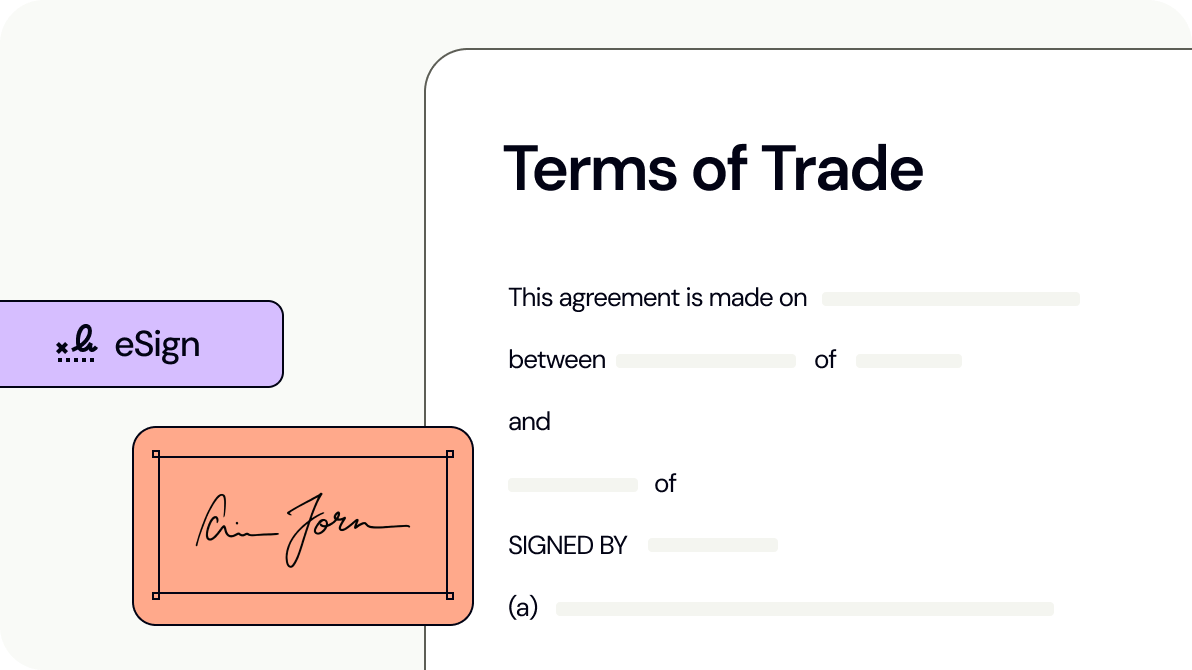
Trusted by Over 650,000 Australians








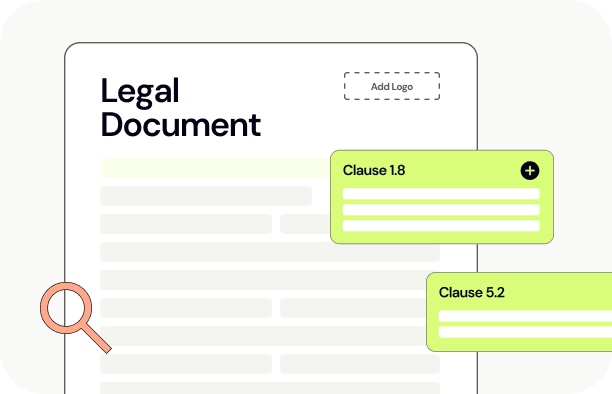
Up-to-date compliance with regulations
Up-to-date compliance with regulations
Laws and regulations are continually evolving, and failure to comply can result in severe consequences for businesses. Our Terms of Trade is constantly updated by legal professionals to ensure it stays up-to-date with the latest laws and regulations in Australia.
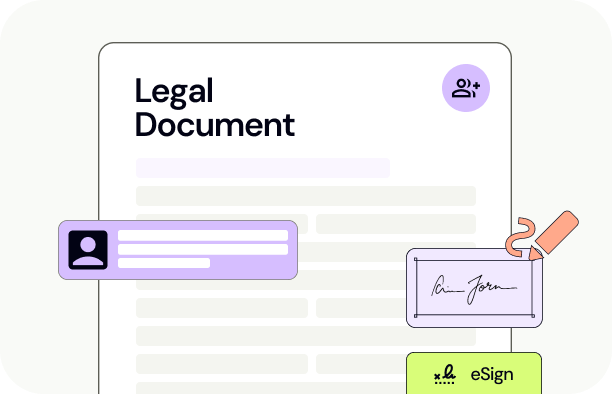
Advanced Al for Personalised Terms of Trade
Advanced Al for Personalised Terms of Trade
Leveraging advanced Al technology and guided questionnaires, we ensure the Terms of Trade is customised to meet the unique needs and specific requirements of your business.
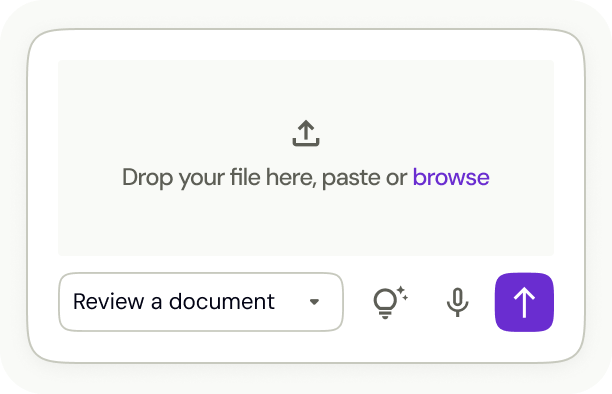
Efficiency and Convenience
Efficiency and Convenience
With a few clicks and by answering a guided questionnaire, we incorporate your responses into a professionally drafted Terms of Trade in under 5 minutes.
How it works
Follow the steps below and you'll have your ready-to-use document in no time

STEP 01
Set up a free account

STEP 02
Search and find the document you need from our list

STEP 03
Follow the prompts and fill in all the relevant details

STEP 04
View and share your ready to use legal document
Document Overview
A Terms of Trade is a document that regulates the terms of an ongoing trade relationship between a supplier and customer. The circumstances surrounding trade transactions can be complex and there are several risks involved with the supply of goods. For this reason, it is common to set out the general terms by which business will be conducted before finalising particular transactions. This is particular important in a context where transactions, and their variations, may be agreed on verbally, or with little paperwork.
The terms in this document are designed to help protect your interests as a supplier or customer engaging in trade. When businesses enter into trade relationships without appropriate legal protection, they leave themselves open to liability down the track.
What are terms of trade?
To begin, terms of trade are the rights and obligations set out in a business agreement for an ongoing trade relationship. Consequently, they are legally binding and are usually recorded in writing, providing for an effective mechanism to guard against risks.
The following kinds of agreements can be structured through terms of trade such as this one:
- Distribution agreements.
- Purchase agreements.
- Lastly, Supply agreements.
How do they work?
Terms of trade agreements are legally binding contracts that are stated to apply to all subsequent transactions between the parties. Therefore they help to provide transparency and minimise the chances of conflict. Moreover, they are the conditions that will govern the relationship and act as a reference point if conflict should arise.
Who uses them?
Terms of trade agreements are usually made with businesses who categorise themselves as suppliers, suppliers of raw materials, finished goods or service providers. That is to say, they often initiate a relationship with a proposal or quote. This process usually involves the business explaining the work that they will complete and the associated costs.
Legislative context
Agreements that set out standard terms and conditions in a business relationship are regulated by statutes such as the Sales of Goods Act 1923 in NSW. This Act ensures that terms of trade for the supply of goods or services (contracts of sale) are valid in accordance with the rules that dictate when goods pass between parties. Moreover, the Act provides rules for performance under these kinds of agreements.
Meet Our Users
Use this Terms of Trade if:
- You are a supplier of goods
- You wish to enter into an agreement with a customer that sets out the terms of your relationship
- You want to protect your business from potential liabilities and loss
What does this Terms of Trade cover?
- Quotes
- Orders
- Variations
- Invoicing and payment
- Additional charges
- Acceptance of goods
- Risk
- IP rights
- Agency and assignment
- Defaults and Termination
- Exclusions and limitation of liability
- Indemnity
- Force majeure - unexpected, uncontrollable acts
- Dispute resolution