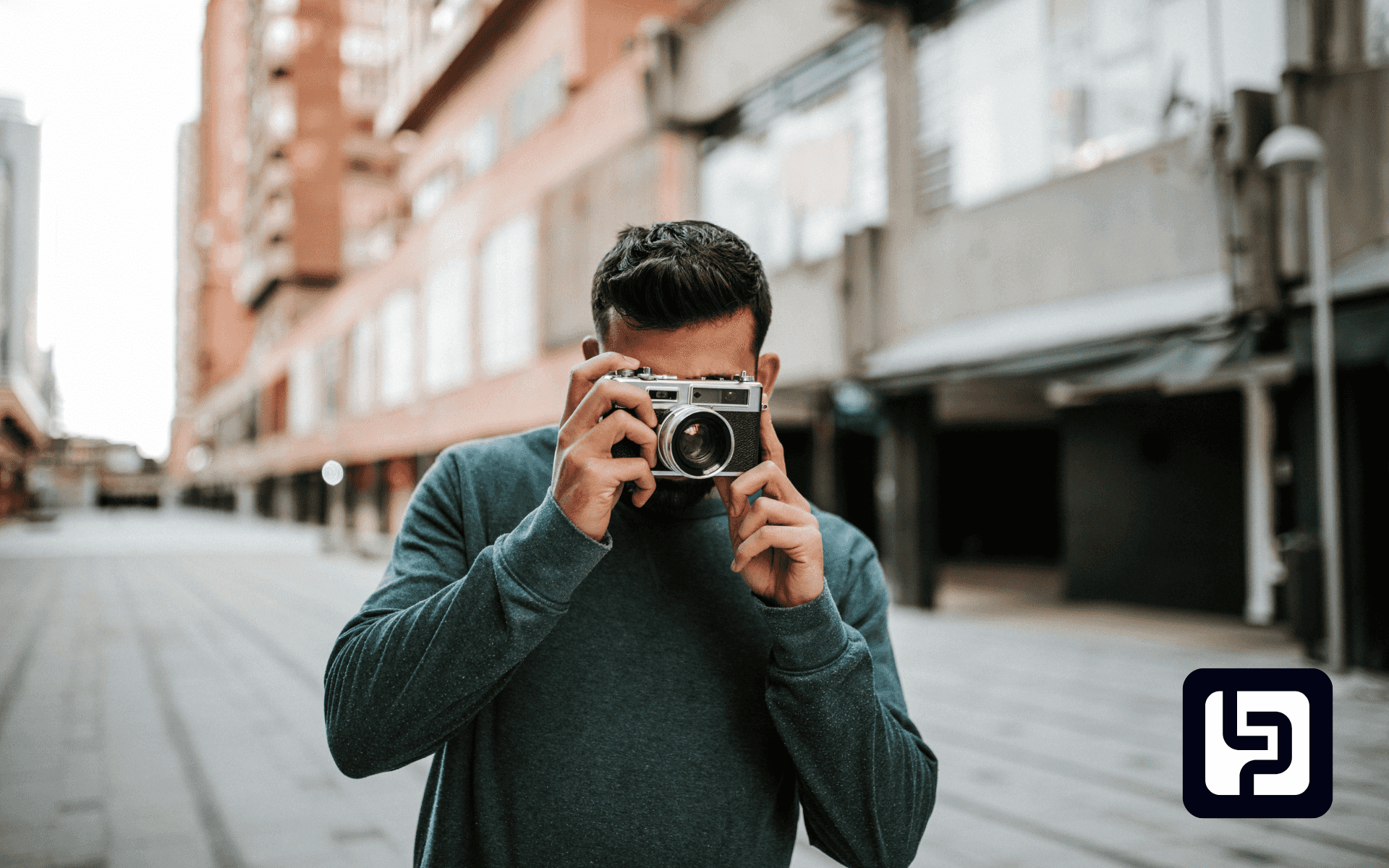
Yes, you can film in public in Australia. No law stops you filming a street, park, beach or footpath, and Australian law gives nobody a general right not to be filmed. The limits kick in around four things: audio, private moments, who controls the place you’re standing in, and what you do with the footage afterwards.
Most people learn where those limits sit the hard way. A security guard walks over. A stranger leaves an angry comment. A takedown request lands the day after your Reel goes live. Where it goes wrong is almost always the sound or the posting, rarely the filming itself.
Fast facts
- Filming people in a genuinely public place is legal. You don’t need permission from everyone who walks through your shot.
- Audio is the real trap. Recording a private conversation you’re not part of is an offence in every state and territory, even on a public street.
- “Open to the public” doesn’t mean public. Shopping centres, stadiums, universities and train stations set their own filming rules.
- Posting carries more risk than filming. Since June 2025, people can sue for serious invasions of privacy, and truth is no defence.
- Using someone in marketing needs a signed release. Permission to film a person is not permission to put them in an ad.
Can you film in public in Australia?
Yes. Courts have said for decades that a person in a public place has no right not to be photographed, and video follows the same logic. If you’re standing on a footpath filming a busy intersection, the people crossing it are fair game.
That freedom has edges, though. Filming in public in Australia becomes unlawful once it crosses into another area of law. Those areas are:
- Surveillance device laws (mostly about audio and private activities)
- The new statutory privacy tort and state voyeurism offences
- Trespass and conditions of entry on private land
- Harassment, stalking and doxxing laws
- Defamation and consumer law, once footage is published
- Copyright, permits and drone rules
Most founders assume the location decides everything. In practice, the purpose matters just as much. A tourist filming a laneway and a café filming the same laneway for a paid Instagram ad are doing the same physical act with very different legal exposure.
Do you need consent to film someone in public?
Can you film in public in Australia without anyone’s consent? Yes. Consent matters when you want to use people, and that’s the distinction that trips people up.
Lawpath lawyers explain it the same way in consultation after consultation: taking footage and publishing it are two separate legal acts.
Here’s how the consent question plays out in real shoots.
| Situation | Consent needed? | What to do |
|---|---|---|
| Crowd or passers-by in the background | No | Keep them incidental and out of focus |
| One person clearly featured, personal video | Not legally, but ask | A quick verbal OK on camera avoids awkward complaints |
| Street interview or vox pop | Yes, in practice | Written release plus a clear audio consent at the start |
| Identifiable person in an ad, brand Reel or website | Yes | Signed release that names the platforms and duration |
| Children featured | Yes, from a parent or guardian | Guardian countersigns; avoid identifying details |
Why insist on a release for marketing when the filming itself was legal? Because using a recognisable person in promotional content can suggest they endorse you. That’s a misleading conduct problem under the Australian Consumer Law, and it has nothing to do with whether you were allowed to press record.
Verbal consent captured on video counts for something. Written consent is far easier to prove a year later when the person changes their mind. A video release for interviewees and film extras covers this in a page, and a photo release form does the same job for stills.
Can you record audio in public in Australia?
Sometimes. Audio is the single biggest legal trap when you film in public in Australia, and it catches people who would never dream of filming through a window.
Every state and territory has its own surveillance or listening devices law. They all target “private conversations”, meaning a conversation where the people talking would reasonably expect not to be overheard. A couple whispering on a park bench is having one. Someone shouting into their phone on a train platform probably isn’t.
One rule holds everywhere: recording a private conversation you’re not part of is an offence, no matter how public the location. Point a shotgun mic at two strangers and you’ve broken the law in every jurisdiction.
The rules split when you’re one of the people talking:
| State or territory | Main law | Can a participant record without everyone’s consent? |
|---|---|---|
| Victoria | Surveillance Devices Act 1999 | Yes, but sharing the recording is restricted |
| Queensland | Invasion of Privacy Act 1971 | Yes, but sharing the recording is restricted |
| Northern Territory | Surveillance Devices Act 2007 | Yes, but sharing the recording is restricted |
| New South Wales | Surveillance Devices Act 2007 (NSW) | Only in narrow cases, such as protecting your lawful interests |
| ACT | Listening Devices Act 1992 | Only in narrow cases |
| Tasmania | Listening Devices Act 1991 | Only in narrow cases |
| South Australia | Surveillance Devices Act 2016 | Only in narrow cases, such as the public interest |
| Western Australia | Surveillance Devices Act 1998 | Only in narrow cases, such as the public interest |
Notice the pattern? Even the permissive states clamp down on what you do with the recording afterwards. Publishing it is a separate risk from making it.
Several states also regulate filming a “private activity” with a camera, which matters for anything shot into homes, change rooms or cars. If you’re filming across state lines or posting nationally, follow the strictest rule. It’s simpler, and nobody gets prosecuted for asking permission. Our guide on whether it’s legal to record a phone call walks through the same consent rules for calls.
The practical fix is boring and it works. Mute the camera mic for B-roll, add music in the edit, and put a lapel mic only on the person who has agreed to be recorded. If you’re running a podcast or audio interview, an audio release gets the consent in writing.
What counts as a public place?
Streets, footpaths, public parks and beaches are public places. Plenty of spots that feel public are not.
Shopping centres, stadiums, airports, train stations, hospitals, event venues and university campuses are owned or controlled by someone. Anyone can walk in, but the owner sets the conditions of entry. If those conditions ban filming, you can be asked to stop and leave. Refusing to leave turns you into a trespasser.
Universities surprise people most. Lawpath lawyers regularly tell content creators that a campus is not a public place, so you need the university’s permission and you need to follow its filming policy, even for a short YouTube segment.
What can’t venue staff do? They can’t confiscate your phone or force you to delete footage on the spot. They can make you leave, and a ticketed event can also restrict how you use footage through the ticket terms.
Can you film in government buildings?
Treat them like private property. Courts ban filming without the court’s permission in every state, and parliaments, police stations, defence sites and many service centres have their own rules and signage. Filming the outside of a government building from the footpath is fine. Filming inside one needs permission first.
Can someone film me without permission on private property?
On your own property, you set the rules. You can tell someone to stop filming and leave, and if they refuse, they’re trespassing.
Filming your property from the street is a different question. The outside of a house or shopfront seen from the footpath is fair to film, which is why street-view mapping exists. The line gets crossed when the filming becomes intrusive: zooming into a bedroom, recording a bathroom window, or repeatedly targeting one home.
Intrusive filming like that can be a criminal offence under state voyeurism and surveillance laws. Since 10 June 2025, it can also support a claim under the statutory tort for serious invasions of privacy in Schedule 2 of the Privacy Act 1988 (Cth). The tort covers intrusion into someone’s private space and misuse of their private information, and it applies to individuals and small businesses alike.
Running home security cameras? Lawpath advisers give the same advice in nearly every CCTV consultation: point them at your own property, avoid capturing your neighbour’s yard or windows, and switch off audio unless you have a strong reason to keep it.
Can you film police or public officials?
Yes, you can film police doing their job in a public place. Officers can’t demand you delete footage just because they’d prefer you didn’t have it.
What you can’t do is obstruct them, enter a crime scene or cordon, or ignore a lawful direction to move back. Stand at a distance, keep your hands visible and narrate as little as possible. Audio is the weak point here too, since a private conversation between an officer and a member of the public could fall under your state’s surveillance law.
Do businesses need a permit to film in public?
For a phone and a smile, rarely. Once you add crew, gear or a paid campaign, councils start to care. Can you film in public in Australia for a business without a permit? For a quick handheld clip, sometimes. For anything bigger, plan on one.
Most councils require a permit for commercial filming on public land, especially when you set up tripods, lights or anything that blocks a footpath. Expect to show public liability insurance and a short description of the shoot. National parks, beaches managed by state agencies and transport hubs run their own permit systems.
| Scenario | Permit or permission? | Why |
|---|---|---|
| Personal phone video in a park | No | Low impact, no commercial use |
| Quick handheld brand Reel on a footpath | Check your council | Some councils exempt tiny crews, others don’t |
| Crew with lights, tripods or talent | Yes, council permit | Public safety and footpath access |
| Inside a shopping centre or venue | Yes, from the owner | Private property and conditions of entry |
| National park or protected site | Yes, from the land manager | Separate park permit systems apply |
| Drone footage for business | Yes, CASA rules | Registration and operator accreditation |
Drones deserve their own warning. Any drone flown for business has to be registered with CASA, and the standard rules keep you at least 30 metres from people and away from crowds. Read our explainer on licences for commercial drones before you book that aerial shot.
Filming your own staff raises a different set of rules. Workplace surveillance laws in NSW and the ACT require written notice before you start, and the law draws a hard line at toilets, change rooms and genuine break areas. A workplace surveillance policy that staff sign is the simplest way to show you gave proper notice.
Can you post footage of people online?
Yes, but publishing is where most of the legal risk sits. A clip that was lawful to film can still be unlawful to post.
Here’s what changes the moment you hit upload:
- Privacy tort. A person can now sue over a serious, intentional or reckless invasion of their privacy. Truth is no defence, so “but it really happened” won’t help.
- Defamation. A caption, edit or reaction emoji can imply someone did something wrong.
- Doxxing. Federal offences introduced in late 2024 target publishing someone’s personal data in a menacing or harassing way.
- Consumer law. Featuring a person in brand content without a release can imply an endorsement they never gave.
- Platform rules. Instagram, TikTok and YouTube will remove content on privacy complaints, often faster than any court.
The “call-out” video is the riskiest format by far. Filming a rude customer, a bad driver or a tradie who didn’t finish the job feels like justice. Posted with a name, a business logo or a number plate, it can combine defamation, privacy and doxxing risk in a single clip. Blur faces and plates, or don’t post it.
One more thing most creators don’t realise. If someone withdraws their consent later, you can stop future use, but you can’t claw back copies already shared or reposted on other platforms. That’s a good reason to get the release right before you publish, not after.
What copyright issues apply when filming in public?
Some public works are free to film. Others are not, and the difference catches out a lot of brand shoots.
Under sections 65 and 66 of the Copyright Act 1968 (Cth), you can film sculptures and works of artistic craftsmanship permanently located in a public place, plus any building, without infringing copyright. A bronze statue in a city square or a landmark tower is safe to capture and publish.
Murals and street art are the common mistake. A mural is a painting, and paintings are not covered by those exceptions. A mural drifting through the background is low risk. Making it the hero of your product shot, or the backdrop for an entire ad, is a copyright infringement risk, and the artist’s moral rights add another layer.
Music is the other trap. A song playing in a café will be picked up by your mic and flagged by platform detection systems. Mute ambient audio and add licensed music in the edit. Live performances at events need the performer’s or organiser’s permission.
What we see in Lawpath consultations
Lawpath lawyers handle questions about filming, photography and surveillance every week, from first-time YouTubers to businesses installing camera systems. A few patterns come up again and again.
Creators assume posting is covered because filming was legal
This is the most common wrong assumption. Advisers keep making the same correction: taking footage in public is lawful, but putting an identifiable person on business social media, a portfolio or a website calls for a release. The fix is a short consent form, not a legal opinion.
Consent forms work better with three options, not one
When businesses film participants at events, courses or classes, lawyers often recommend giving people three choices: no consent, consent with de-identification, or full consent. More people say yes when they can choose the middle option, and you avoid the admin headache of partial opt-outs.
Media consent gets buried inside other documents
A consistent pattern with activity businesses is a filming consent tucked into a liability waiver. Advisers recommend splitting them, or at least naming both purposes in the document title, and defining what “content” covers (video, photos, coaching feedback).
Staff filming in uniform creates brand risk
Employees posting how-to videos in company uniform can look like official brand content, even when nobody approved it. That raises apparent authority and consumer law questions. Employers who film staff for training or promotion also do better with a filming clause in the employment contract and a clear way to opt out in writing.
CCTV gets installed before the policy is written
More often than expected, a new camera goes up near a break area and the staff complaint arrives before the paperwork. Fix the camera angle first, then put the policy in writing and get signed acknowledgements.
Checklist before filming in public
Run through this before any shoot that’s more than a personal clip. It takes two minutes, and it covers the questions that decide whether you can film in public in Australia without a problem later.
- Is this a genuinely public place, or does someone control it? If someone controls it, get permission in writing.
- Am I recording audio? If yes, mute it or make sure every speaker has agreed.
- Will anyone be identifiable and featured? If yes, get a signed release.
- Are there children in shot? Get a parent or guardian to countersign, or reframe.
- Is this for commercial use? Check council permits and insurance.
- Am I flying a drone? Confirm CASA registration and the 30-metre rule.
- Is there music, a mural or someone else’s logo as the focus? Remove it or license it.
- Could the post embarrass, accuse or identify someone? Blur, cut or don’t post.
- Where will I store releases? Keep them with the project files so you can find them later.
Working with an external videographer? A video production agreement makes sure your business actually owns the footage, and makes the crew responsible for collecting releases on the day.
What can you do if someone films you without permission?
If you’re in a public place, the filming itself is lawful, and you can’t make them delete it. You can ask them to stop, move away, or cover your face.
Your options grow once the behaviour or the footage crosses a line:
- If it’s on private property, ask the venue or owner to enforce their rules.
- If it’s posted online, report it to the platform under its privacy or harassment policy.
- If it’s repeated, targeted or threatening, report it to police under stalking or harassment laws.
- If it captured a private moment or false claims about you, talk to a lawyer about the privacy tort or defamation.
FAQs
Can you film in public in Australia without permission?
Yes. You can film people in streets, parks and beaches without asking. Permission becomes necessary when you record private conversations, film on controlled property, or use identifiable people in marketing.
Is it illegal to film someone in public without their consent?
No, filming someone in public without consent is legal. It becomes illegal if you capture a private conversation, film a private activity, harass them, or publish the footage in a way that invades their privacy or defames them.
Can you record audio in public in Australia?
You can record general background sound. Recording a private conversation you’re not part of is an offence in every state and territory, and NSW, WA, SA, Tasmania and the ACT restrict recording even when you’re part of the conversation.
Can I film inside a shopping centre?
Only with the centre’s permission. Shopping centres are private property, and their conditions of entry can ban filming. Staff can ask you to leave, but they can’t take your phone or force you to delete footage.
Can you film in government buildings?
Not without permission. Courts ban filming, and most government buildings set their own rules. Filming the outside from a public footpath is fine.
Can I film the police in public?
Yes. You can film police in public as long as you don’t obstruct them, enter a restricted area, or ignore a lawful direction. Be careful with audio of private conversations.
Do I need a permit to film in public for my business?
Often, yes. Most councils require a permit for commercial filming, especially with crew, lights or tripods. Expect to show public liability insurance. Drones need CASA registration.
Can I post footage of strangers on social media?
You can post incidental footage, but blur anyone who is featured, embarrassed or identifiable by a name or number plate. Serious privacy invasions can now lead to a lawsuit, and truth is no defence.
Can I film a mural or statue and use it in an ad?
Statues, sculptures and buildings in public places are free to film. Murals are paintings and aren’t covered by that exception, so get the artist’s permission before featuring one.
What can I do if someone films me in public?
Ask them to stop or move away. If it’s posted, report it to the platform. If it’s targeted or threatening, contact police. For serious privacy breaches or false claims, get legal advice.
Ready to film?
Nobody expects you to become a media lawyer to shoot great content. You need one habit: get the release before the camera rolls. Once that’s in place, you can film in public in Australia with confidence, and everything else on this page is easy to fix.
Create your video release for interviewees and film extras today and have it signed before your next shoot.