
SaaS Agreement (Software as a Service)
A Software-as-a-Service (SaaS) Agreement is a contract between suppliers and customers of software.
Last updated October 21, 2025
Suitable for Australia
Trusted by Over 650,000 Australians



Up-to-date compliance with regulations
Up-to-date compliance with regulations
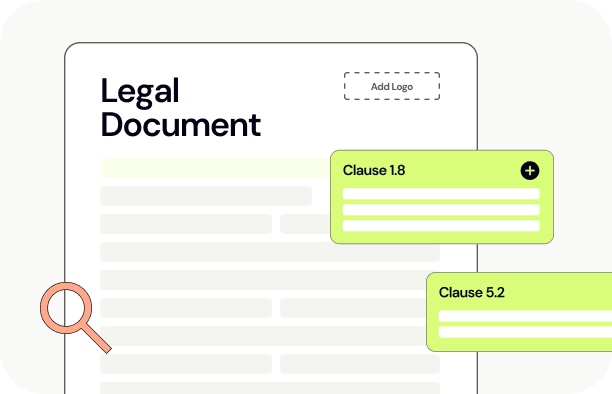
Laws and regulations are continually evolving, and failure to comply can result in severe consequences for businesses. Our SaaS Agreement (Software as a Service) is constantly updated by legal professionals to ensure it stays up-to-date with the latest laws and regulations in Australia.
Advanced Al for Personalised SaaS Agreement (Software as a Service)
Advanced Al for Personalised SaaS Agreement (Software as a Service)
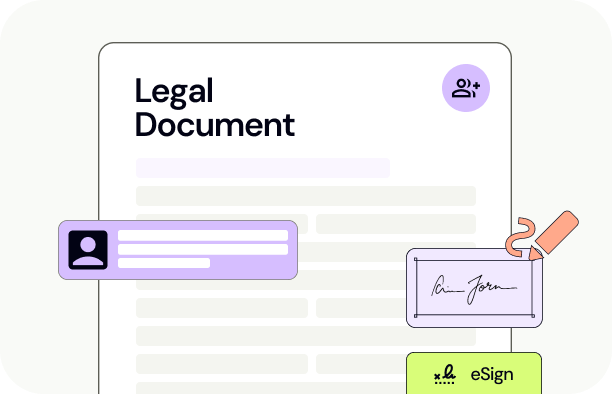
Leveraging advanced Al technology and guided questionnaires, we ensure the SaaS Agreement (Software as a Service) is customised to meet the unique needs and specific requirements of your business.
Efficiency and Convenience
Efficiency and Convenience
With a few clicks and by answering a guided questionnaire, we incorporate your responses into a professionally drafted SaaS Agreement (Software as a Service) in under 5 minutes.
How it works
Follow the steps below and you'll have your ready-to-use document in no time

STEP 01
Set up a free account

STEP 02
Search and find the document you need from our list

STEP 03
Follow the prompts and fill in all the relevant details

STEP 04
View and share your ready to use legal document
Document Overview
A software as a service (SaaS) agreement is an online model for suppliers (providers) and customers (users) of software. SaaS agreements represent a shift away from traditional software licences which may have involved up-front payments and time-consuming updating processes.
SaaS can help you downsize your in-house IT, giving you more time and flexibility to establish other areas of your business such as HR and marketing.
To ensure that you are up to date with modern business practices, adopting SaaS applications can allow you to communicate seamlessly with vendors, subcontractors and consumers. This will expand your business touchpoints.
Lawpath itself is modelled on Saas modes of service delivery.
The Importance of a SaaS agreement
An effective SaaS agreement describes the service level, disclaimers and liabilities. By explaining the service level, it sets out the goals and limits of service for the user. For example, a well-described service level may clarify the minimum uptime of the service, how it is measured or the support response time for the service.
How Do They Work?
SaaS users subscribe to an application, where information is usually backed up by an online cloud server. Since this is only a software subscription and not a licence, the provider charges a fee for access. This document contains the terms that regulate how the provider will make the software accessible for the customer. This document also allows providers to cater the terms of the SaaS agreement to their service. For example, the provider can customise the provisions that outline maintenance, support services, service level and setup of the service for the user to fit the needs of their service.
Meet Our Users
Benefits of SaaS for customers
- With SaaS, there is no need to install new software so you have the opportunity of improved IT operations without stressful costs and management concerns. Updates can also be installed periodically on an automatic basis, or as required.
- It’s accessible. Upon subscription, users are normally asked to create a quick online account with the SaaS provider. The SaaS software can be accessed and opened on any computer or internet enabled device. This helps to avoid the trouble of having only a couple of primary computers with access.
- Having a maintenance clause within the agreement will also simplify the need to synchronise any updates or problems with the software on your own, as these will be transferred to the supplier. Under a maintenance clause, the suppliers will agree to resolve any IT issues for you.
What does this SaaS Agreement cover?
- SaaS Services and Support
- Restrictions and Responsibilities
- Confidentiality and Proprietary Rights
- Payment of Fees
- Term and Termination
- Warranty and Disclaimer
- Indemnity
- Limitation on liability
- General Terms
- Statement of Work
- Service Level Terms
- Support Terms
- Order Form