

Tom Willis is an award-winning marketing leader and Co-founder of Lawpath. Tom’s journey journey includes steering several entrepreneurial projects and addressing the unique challenges faced by small businesses. As the Chief Marketing Officer at Lawpath, Tom has been pivotal in shaping the company’s marketing strategy and business growth.
Introduction
There are similarities between an assignment and novation as they perform resembling actions in contract. However, there is a difference and we will identify that for you in this article.
What is an assignment?
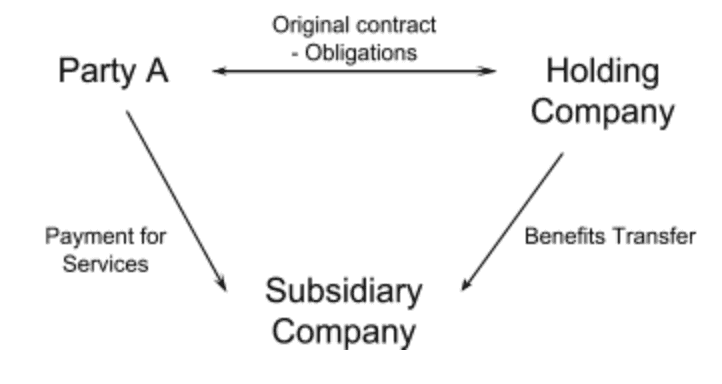
An assignment in contract is transferring an interest or benefit from one party to another. Likewise, there is no transfer of the burden (obligations) under the contract. Read more about What is an Assignment?
An example is where a holding company needs to perform a particular obligation and ask for the payment to a subsidiary company. The diagram below shows how this works.
What is a novation?
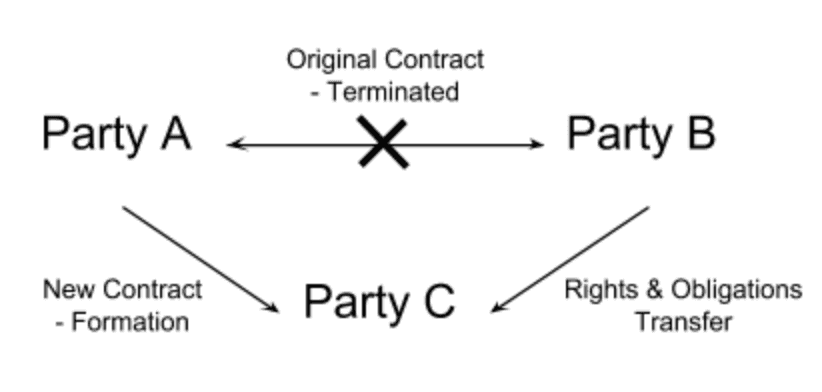
If you are looking to transfer the obligations of a contract as well as the benefits under it, you are talking about novation. It is similar to assignment because it transfers the benefits under a contract but also transfers the burden of a contract. Read more about What is Novation?
An example may be when two parties have a contract however one of the parties is involved in a takeover or sale of business. Therefore to prevent the contract lapsing there is a novation to substitute the new party in place of the departing party. The diagram below shows how this works.
Basic Differences
| Assignment | Novation |
| Only intangible rights are being transferred | Both rights & obligations are being transferred |
| Original contract remains unchanged | Original contract is terminated |
| Not necessary to form new contract | New contract or deed must be made |
| No need to obtain consent from the other parties to the original contract | Consent must be obtained from all parties to the original contract |
Conclusion
As you have discovered that both an assignment or novation are similar in their executions but have different outcomes. Therefore, it is important to understand those differences. Moreover, assignment is a partial transfer (in respect to the rights of a contract) to a third party. A novation is a complete transfer of that contract (rights & burden) to another party. In both instances of transferring rights or obligations to a third party, consult a contract lawyer.
Unsure where to start? Contact a LawPath consultant on 1800 529 728 to learn more about customising legal documents and obtaining a fixed-fee quote from Australia’s largest legal marketplace.