
Deed of Release (Termination)
A Deed of Release (Termination) can be used when you have terminated an employee.
Last updated October 23, 2025
Suitable for Australia

Trusted by Over 650,000 Australians








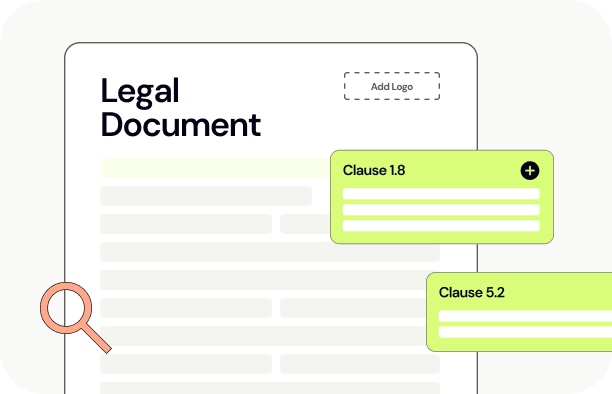
Up-to-date compliance with regulations
Up-to-date compliance with regulations
Laws and regulations are continually evolving, and failure to comply can result in severe consequences for businesses. Our Deed of Release (Termination) is constantly updated by legal professionals to ensure it stays up-to-date with the latest laws and regulations in Australia.
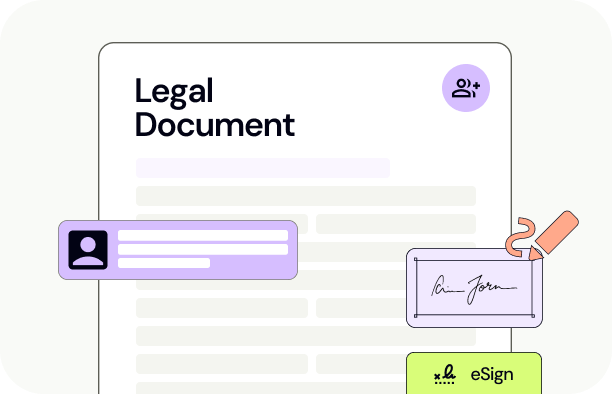
Advanced Al for Personalised Deed of Release (Termination)
Advanced Al for Personalised Deed of Release (Termination)
Leveraging advanced Al technology and guided questionnaires, we ensure the Deed of Release (Termination) is customised to meet the unique needs and specific requirements of your business.
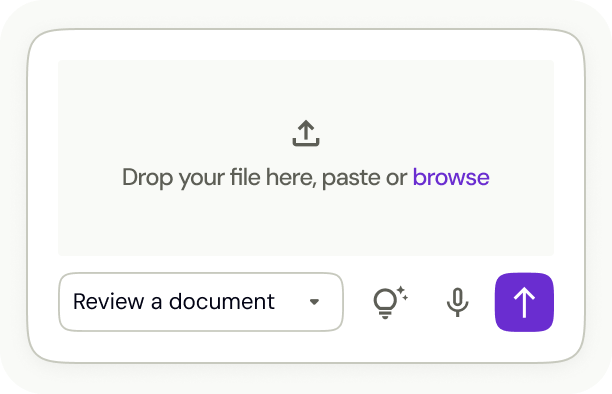
Efficiency and Convenience
Efficiency and Convenience
With a few clicks and by answering a guided questionnaire, we incorporate your responses into a professionally drafted Deed of Release (Termination) in under 5 minutes.
How it works
Follow the steps below and you'll have your ready-to-use document in no time

STEP 01
Set up a free account

STEP 02
Search and find the document you need from our list

STEP 03
Follow the prompts and fill in all the relevant details

STEP 04
View and share your ready to use legal document
Document Overview
This Deed of Release (Termination) is to be used upon the termination of an employee. This deed is to be signed by the employee, finalising all outstanding issues between the employer and employee. This Deed of Release (Termination) will allow you to cover any final payments, releases, confidentiality and warranties by the terminated employee. A Deed of Release (Termination) will also allow you to deal with future issues smoothly, such as contractual claims or claims arising out of the termination of employment.
What’s the difference between a Deed of Release and a termination letter?
A Deed of Release is a formal document entered into between two parties when settling a dispute or to prevent one from occurring. It is a legal document that releases parties from their previous obligations and it is commonly used for settling transfer of title for property and when an employee leaves a company. A Deed of Release entitles an employer to release you from obligations in exchange for ex-gratia payments (i.e. lump sum payment) to the employee. It is used by employers to bar employees from bringing employment-related claims against them, an unfair dismissal claim or any other relevant claims.
In contrast, a letter of termination is used to terminate an employee’s employment when their performance or conduct has been unsatisfactory or they are being made redundant. The information that is included in a termination letter identifies the reasons for their termination, specifies the length of the notice period and advises the employee when their last day of work will be. Employees that have received termination letters are not barred from filing claims about unfair dismissals from their workplace. This means that employers remain vulnerable to the possibility of legal action and further compensation when only a letter of termination is used.
As an employer, will a Deed of Release protect me from an unfair dismissal claim?
A Deed of Release will protect employers from an unfair dismissal claim. However, if the employee can prove that there was an element of duress, undue influence or unconscionable bargaining, it may not be legally enforceable and will be set aside. Duress is where the employer places excessive pressure on the employee to sign the Deed of Release.
Undue influence is another form of excessive pressure where the employee is under the assumption they were entering into a fair bargain, but no fair agreement can be reached. Additionally, another reason that a Deed of Release can be set aside is by demonstrating that there was unconscionable bargaining. This is where the employee was not aware of the implications of the document and there is a inherent imbalance of power between the parties. Some factors that can be used to show unconscionable bargaining is cognitive disabilities, lack of education and language skills.
Meet Our Users
Can I force an employee to sign a Deed of Release?
An employer cannot force or induce an employee to sign a Deed of Release, otherwise it can be set aside as being entered under undue influence or duress. However, if an employee was forced to sign a Deed of Release upon termination of employment, you should seek legal advice to determine whether you can be compensated against your former employer. This can be set aside by a court when an application is made. But, this is determined on the facts and circumstances of your case.
How legally enforceable is a Deed of Release?
A Deed of Release is a legally binding agreement that is entered between an employer and employee, on termination of employment. If there is uncertainty over some of the terms of the Deed of Release, it is important to get legal advice to determine the meaning and effect of that clause and whether they are enforceable to your case. If this particular clause is not enforceable, the lawyer can order that the term be removed or narrowed.
Should a lawyer review my Deed of Release?
It is important you speak to a lawyer before signing a Deed of Release. A Deed of Release will prevent you from making claims against your former employer so it is important to understand the extent of the clause and what you are giving up, in exchange for a lump sum payment. A lawyer should determine whether this Deed of Release will impose a blanket ban on all claims against your former employer or only for specific disputes. Also, lawyers should review the Deed of Release to determine whether your employer will provide you with a reference for future job applications. This will be very important if you want to continue working in the same industry.