
Full Time Employment Agreement
This Full Time Employment Agreement covers everything you need when hiring a new full time employee. It is applicable to any industry in Australia.
Last updated February 25, 2025
Suitable for Australia
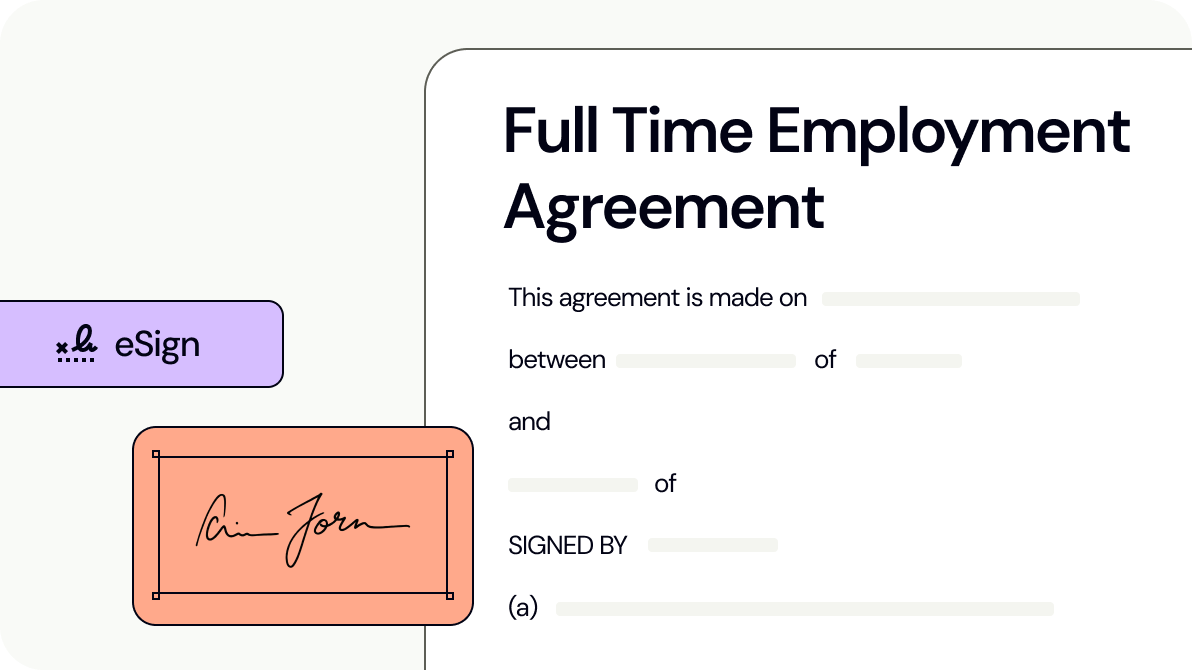
Trusted by Over 650,000 Australians








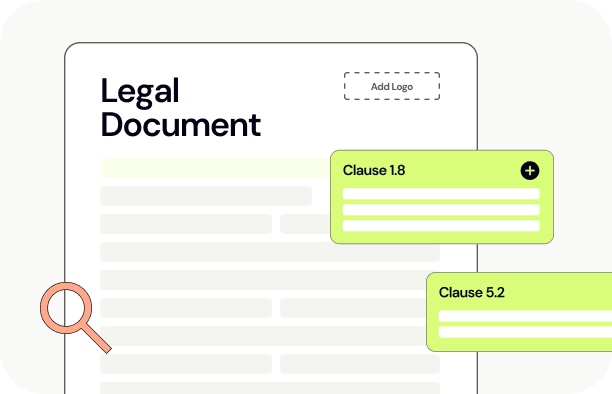
Up-to-date compliance with regulations
Up-to-date compliance with regulations
Laws and regulations are continually evolving, and failure to comply can result in severe consequences for businesses. Our Full Time Employment Agreement is constantly updated by legal professionals to ensure it stays up-to-date with the latest laws and regulations in Australia.
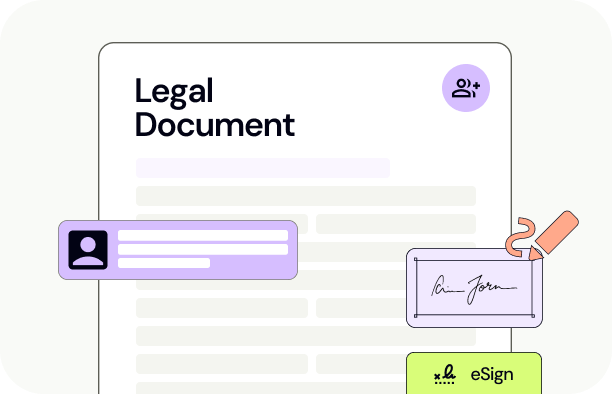
Advanced Al for Personalised Full Time Employment Agreement
Advanced Al for Personalised Full Time Employment Agreement
Leveraging advanced Al technology and guided questionnaires, we ensure the Full Time Employment Agreement is customised to meet the unique needs and specific requirements of your business.
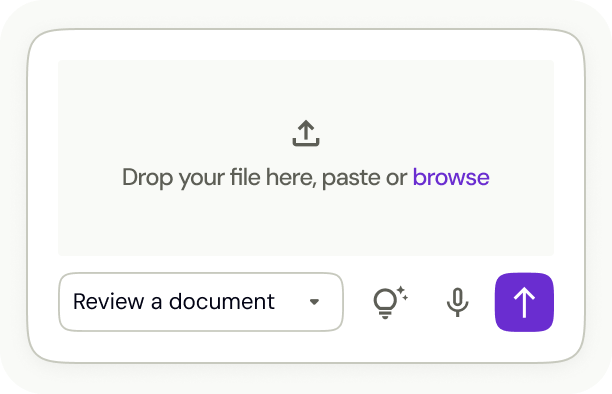
Efficiency and Convenience
Efficiency and Convenience
With a few clicks and by answering a guided questionnaire, we incorporate your responses into a professionally drafted Full Time Employment Agreement in under 5 minutes.
How it works
Follow the steps below and you'll have your ready-to-use document in no time

STEP 01
Set up a free account

STEP 02
Search and find the document you need from our list

STEP 03
Follow the prompts and fill in all the relevant details

STEP 04
View and share your ready to use legal document
Document Overview
An Employment Agreement sets out the terms, expectations, and responsibilities for employers when hiring a new employee. It is important to clearly document in writing the employment relationship between you and your full time employee. A clearly written employment agreement means your business can run smoothly and you can save time and money if a dispute arises.
This Employment Agreement is for any full time permanent employee working in any industry or state in Australia.
Remote Working
Remote working has emerged as a transformative trend in full-time employment, driven largely by advancements in technology and changing attitudes towards work-life balance after the COVID-19 pandemic. This trend has continued well beyond the pandemic, reshaping the traditional office-based work model.
Remote working offers numerous benefits for both employers and employees. For employees, it provides greater flexibility in managing their time and work environment, leading to increased job satisfaction and productivity. Moreover, it eliminates the need for long commutes, reducing stress and improving overall well-being. Employers, on the other hand, benefit from access to a larger talent pool, reduced overhead costs associated with office space, and increased employee retention rates.
Overall, remote working represents a significant shift in the way full-time employment is structured. As technology continues to advance and remote work becomes more normalized, organizations must adapt their policies and practices to effectively manage remote teams and maximize the benefits of this flexible work arrangement.
It is important to ensure that you are clear on whether, or how, you wish to implement remote working into this role.
Technological Advancements and Automation
Technological advancements and automation are reshaping the arena of full-time employment, driving innovation and efficiency while also raising concerns about job displacement and skill gaps. Automation, powered by artificial intelligence and machine learning, has the potential to streamline workflows, improve productivity, and reduce operational costs across various industries.
In full-time employment, technological advancements have led to the creation of new roles and skill requirements. Workers are increasingly expected to possess digital literacy and proficiency in technology tools and platforms. Moreover, automation has enabled the outsourcing of routine tasks, allowing employees to focus on higher-value activities that require creativity, critical thinking, and problem-solving skills.
To maintain an advantage, you should consider implementing automation and other cutting edge technologies into your workplace.
Meet Our Users
Key Components of a Full-Time Employment Agreement
When drafting a full-time employment agreement, it’s crucial to ensure that all essential components are clearly outlined to establish mutual understanding and expectations between the employer and the employee. Here are ten key elements that should be included:
- Salary and Compensation: Clearly state the employee’s salary, including any bonuses, commissions, or other forms of compensation. Outline the frequency of payment and any provisions for salary increases or adjustments.
- Work Hours: Define the standard work hours expected from the employee, including start and end times, as well as any provisions for overtime or flexible work arrangements.
- Benefits: Specify the benefits package offered to the employee, such as health insurance, retirement plans, vacation days, sick leave, and any other perks provided by the employer.
- Job Duties and Responsibilities: Clearly define the roles and responsibilities of the employee within the organization. This includes a detailed description of tasks, projects, and deliverables expected from the employee.
- Confidentiality and Intellectual Property: Include provisions regarding the protection of confidential information and intellectual property belonging to the company. Specify the employee’s obligations to maintain confidentiality and assign any intellectual property rights created during employment to the employer.
- Notice Periods and Termination: Detail the notice periods required for both the employer and the employee in the event of termination or resignation. Include provisions for payment in lieu of notice and any conditions for termination.
- Probationary Period: If applicable, specify the duration and terms of any probationary period for new employees. Outline the evaluation process and criteria for successful completion of probation.
By incorporating these key components into a full-time employment agreement, employers can create a comprehensive framework that promotes transparency, clarity, and fairness in the employment relationship. This document incorporates all of those components.
If you are looking for a more comprehensive Full Time Employment Agreement, see our Full Time Employment Agreement (Long Form) which additionally includes clauses on:
- Employee obligations;
- Specific term of employment;
- Working hours description;
- Remuneration review;
- Expenses;
- Motor vehicle benefit;
- Share scheme;
- Policies and procedures; and
- Non-solicit option.
If you would like to hire another type of employee (either a part-time employee or casual employee), try using one of our other documents:
Other documents you may need:
- Full Time Employment Agreement (Long Form)
- Non-Disclosure Agreement (One Way)
- Discrimination Policy
- Social Media Policy
- Some Helpful Tips For Hiring Your First Employee
- Are Implied Duties Included in my Employment Contract?
- A Guide to NES: The 11 Employment Entitlements
- Is My Enterprise Agreement Part of My Employment Contract?
- Is the Modern Award Part of My Employment Contract?
- How to Hire an Employee