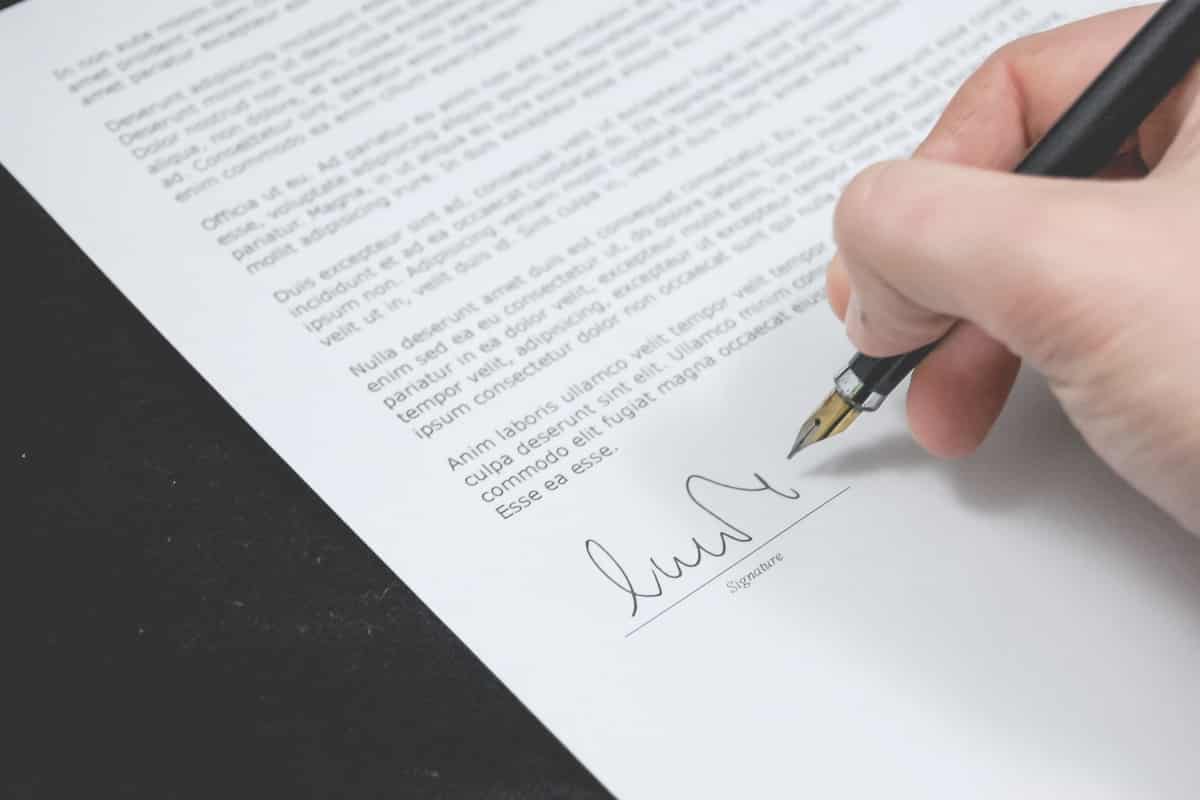
You’ve just noticed your contact has been signed in the wrong place. What does this mean for the agreement? Is it still in place? Let’s have a look.
Signing a contract with your name will generally create a legally binding document. However, if someone signs the contract incorrectly, it may become unenforceable. An unenforceable contract means that a court won’t be able to force the parties to perform their obligations. So, are contracts signed in the wrong place enforceable?
If a contract has been signed in the wrong place, it does not necessarily mean the whole contract is thrown out the window. There are other elements that make a contract legally binding.
What Makes a Contract Enforceable?
What makes a contract enforceable in the first place? In Australia, every enforceable contract must contain the following elements:
- Offer
- Acceptance
- Consideration
- Intention
- Certainty
- Capacity
- Formalities
The requirements of offer and acceptance stipulate that the offer must be clear and definite. The person accepting the offer must clearly communicate their acceptance to the person who made the offer. This creates certainty.
Consideration translates to the price of the contract. Normally, it is in the form money, but it does not have to be strictly monetary.
Intention means that both parties must intend to be legally bound by the agreement.
As a general rule, both parties must be over the age of 18 and have full capacity to enter into a contract.
If all of these elements are present, you will usually have an enforceable contractual agreement.
For more information, you can read our guide ‘What Is the Difference Between a Contract and an Agreement?‘
So, Are Contracts Signed in the Wrong Place Enforceable?
Signing a contract is more than a mere formality and an error in signing the document can render the contract invalid. In some cases, the incorrect signing of a contract has meant that the contract was unenforceable.
However, the law looks to a variety of elements to determine whether a contract is enforceable or not.
The best way to show evidence of these elements is through a correctly executed, written contract. Where there is no written contract, or where the contract has been incorrectly signed, there can be enough evidence to show that the contract is enforceable.
Additionally, there is a presumption that business agreements are legally binding. Essentially, this means that the law presumes that when someone has entered into a commercial agreement, they intend for the contract to bind them.
Further, if you can show that the parties have been performing their side of the contract, this is evidence of their intention. This may be enough to prove an enforceable contract, even when it has been signed in the wrong place.
Conclusion
So, even where a contract has been signed incorrectly, it may still be considered legally binding if the other elements can be proven. Common sense and legal presumptions, favouring the preservation of business relationships, will usually prevail.
Executing a contract correctly is extremely important to ensure the contractual relationship remains intact. Getting it right at the beginning will save yourself the complications. Meeting with a contract lawyer can help you avoid the headache of unexpected errors.