
While digital signatures are becoming common, wet signatures remain crucial for many legal documents, from mortgage papers to court filings, serving as a concrete proof of your agreement and identity. let’s learn more about them in this article.
What is a Wet Signature?
A wet signature is a traditional handwritten signature on a physical document, typically made using ink or another writing tool. Wet signatures are required for legal, financial, or official documents that need physical authentication, such as contracts, notarised forms, and government paperwork.
What is an eSignature?
An eSignature or electronic signature refers to any electronic means of indicating a persons signature as a form of authority or consent. eSignatures have been legally enforceable types of signatures since the enactement of the Electronic Transaction Act 1999 (Cth).
eSignatures can come in many forms, including:
- typing your name
- inserting a photo of your handwritten signature
- electronically drawing your name
To learn more about eSignatures, see ‘What Is An eSignature?‘.
Wet Signature: When is it Required?
Well, eSignature is legally acceptable for signing most contracts and agreements. However, a few types of contracts still require the use of a wet signature on a legal document for a valid execution. Note that there is a lot of ambiguity surrounding whether deeds can be signed electronically.
The three main types of contracts that require wet signatures include:
Execution of Deeds
As stated above, there seems to be a bit of controversy as to whether deeds signed by individuals must be wet signatures. Importantly, a deed requires two things:
(1) Witnessing of the deed: All deeds require a witness to be present at the signing of the deed. This implies that the person signing must be signing the document using pen to paper, with the witness being present for the signing process.
(2) The deed must be presented as a hard copy: Interestingly, when a deed is in electronic form, e.g. as a PDF, it will not amount to a valid deed.
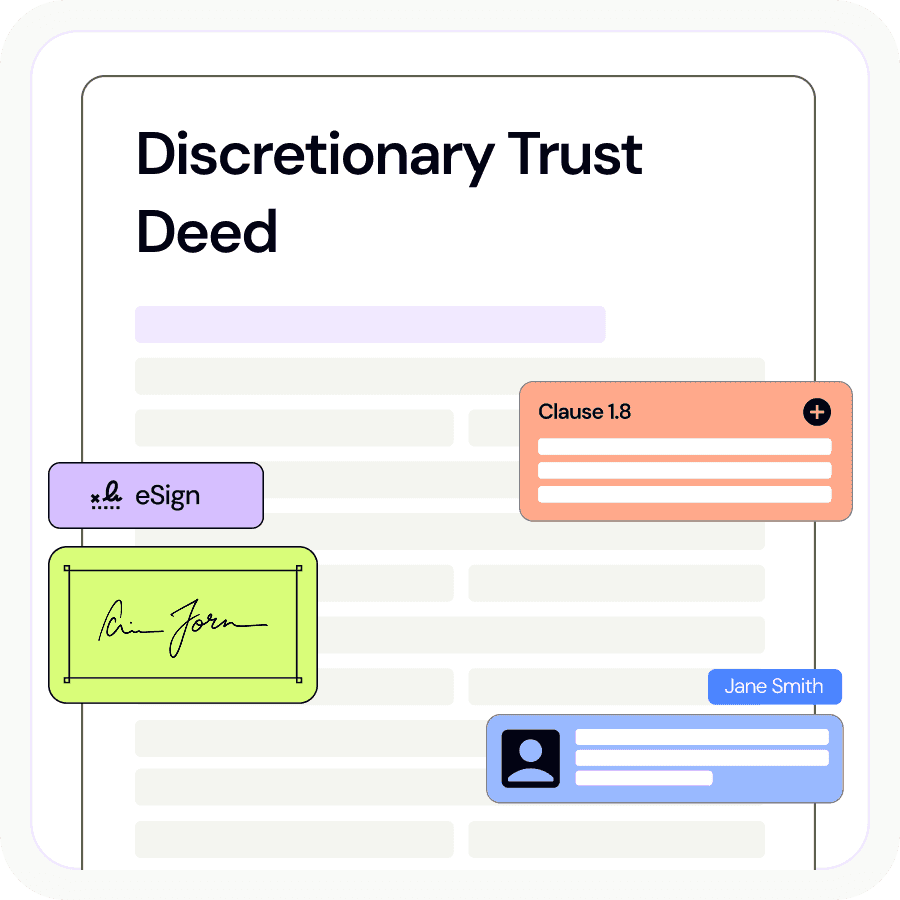
However, there is a lot of debate about whether eSignatures can still satisfy these two critical deed requirements. Many say witnessing is too ambiguous using eSignatures, whilst others say the complete opposite.
The unfortunate consequence is that if eSignatures are not acceptable for deed execution, the entire deed will be invalid. As this is generally too large of a risk to take, many solicitors prefer using wet signatures for deed execution.
Execution of Documents under Section 127 of the Corporations Act 2001 (Cth)
Section 127 of the Corporations Act 2001 (Cth) regulates how companies can sign deeds and other documents. This rule states that companies may sign any document, including deeds, without a witness, by:
- A sole director or,
- Two directors or,
- A director and the company secretary.
Can section 127 be satisfied via eSignature?
During the early stages of the COVID-19 pandemic, both State and Federal Governments enacted temporary legislation to allow companies to sign deeds using eSignature. However, as of March 2021, this temporary legislation expired. Therefore, the rules relating to companies signing deeds and other documents using wet signatures once again applies.
Where Type of Signature is Explicitly Stated
Some documents explicitly prohibit the use of certain types of signatures. For example, the Australia Securities and Investment Commission expresses wet signature requirements. Also, many land title documents express wet signature requirements. It simply depends on the words of the document or any legislation relating to specific types of documents.
Key Takeaways:
The wet signature refers to the physical act of using ‘pen to paper’ to sign a document, agreement or contract. It is simply the good old fashion way of signing a document. eSignature is legally acceptable to sign most contracts and agreements. However, there are a few types of contracts that still require the use of wet signature for a valid execution.
These include, deeds and documents executed by companies and documents that explicitly require a certain type of signature. There is much ambiguity surrounding deeds signed by individuals, however, this is an area of the law which is continuing to develop.