
Introduction
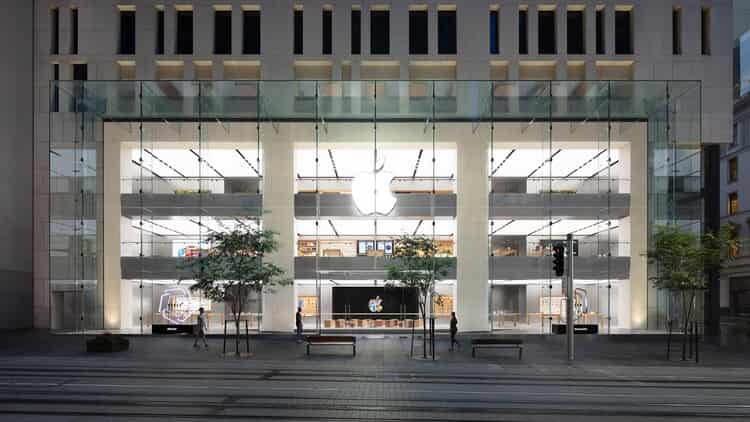
Understanding whether you can trademark your store layout is important if you want to prevent others from copying you. In 2013, Apple successfully applied for a trademark over their store layout in the US. This raises the question of whether it would be possible to do so in Australia. This guide will answer this question by going through a few things. First, we’ll look at what trademarks are generally. Then we’ll dive in deeper to the requirements that a trademark be a sign and distinctive. Finally, at the end, we’ll sum it all up for you.
Trademarks overview
Basically, a trademark is a ‘sign’ you use to distinguish your goods and services from those of your competitors. You can register it under the Trademarks Act 1995 (Cth) (‘Trademarks Act’). We’re going to consider more closely whether the definition of ‘sign’ includes a store layout. We’ll also consider if a store layout is capable of distinguishing goods and services.
Is a store layout a ‘sign’?
A sign is not specifically defined in the Trademarks Act. Rather, the Act provides some examples like words, colours, shapes, and combinations of these things. As such, there are only really two hard limits to this inclusive definition. Firstly, a sign may be prohibited for use as a trademark. Secondly, a sign must be capable of being represented. This basically means that you have to be able to show or explain it in written, visual, audio or other interpretable forms. Considering all of this, you can (in theory) define a store layout as a sign. Firstly, the Trademarks Act doesn’t prohibit trademarking store layouts. Secondly, it is possible to represent a store layout in a combination of colours, shapes, and even actual logos. However, don’t confuse a trademark with a registrable design. At the least, they are different because designs which are trademarks must be distinctive (see below).
Is a store layout distinctive?
A trademark application will be rejected if the trademark is not capable of distinguishing goods and services. This has a specific legal meaning which can get pretty complex. We’re going to try to explain it to you in terms of two types of distinctiveness: inherent and factual.
Inherent distinctiveness
Sometimes, a trademark is inherently capable of distinguishing goods and services. This basically means that it is a sign which you ordinarily use to distinguish goods and services. Think about logos. They are specifically created to be unique and mark products with a brand’s identity using colours, shapes, and words/names. It would be pretty hard to argue that they are not inherently distinctive. On the other hand, it’s pretty unusual to use a store layout to mark goods or services with a brand’s identity. It has a number of more significant functional roles. For one, it sets out how customers access a physical store. It also details how to display goods, and how to provide things like lighting and seating, in the store. Therefore, it would be pretty hard to argue that a store layout is inherently capable of distinguishing goods and services.
Factual distinctiveness
Even if a trademark is not inherently capable of distinguishing goods and services, through the magic of marketing, it may nonetheless actually do so. This is what we refer to as factual distinctiveness. It is largely shown through evidence of actual use of the trademark to distinguish goods and services. The Trademarks Examiner’s Manual provides examples of relevant evidence for this purpose. It includes numbers spent in advertising expenditure, evidence of market share, and consumer surveys. Think about the evidence Apple would have provided to the US Trademark’s Office in their application. Their evidence included, for example, photos of their layout and consumer surveys.
Conclusion
In conclusion, a trademark is a ‘sign’ used to distinguish your goods and services from those of your competitors. As such, you can (in theory) trademark a store layout. This is because a store layout can be a sign. However, it may be difficult to establish that it is capable of distinguishing goods and services. Nevertheless, it has been done before (albeit in the US). So if you’re considering trademarking your store layout, speak to a patent lawyer to find out your options.






