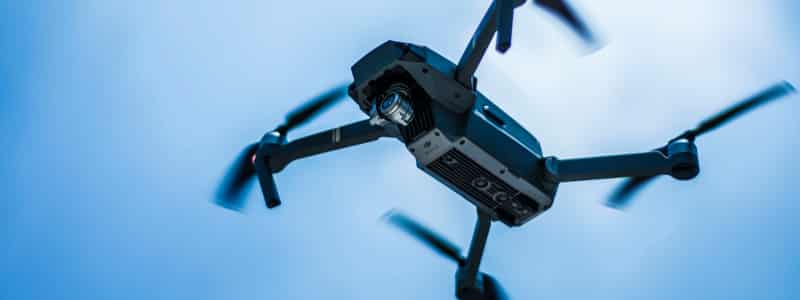
Unmanned aerial vehicles (UAVs), or drones, are an emerging technology which can improve many aspects of business. They can be used to make commercial deliveries.
Let’s examine this in light of Amazon’s recent successful patent claim for their mini-drone.
Do you have an invention with the potential to change the world? Patents can help to protect your inventions. If you wish to apply for one, LawPath has a simple online patent application process to help you.
Background
Last week, Amazon filed a patent for a mini-drone which can be voice commanded through a smartphone app to perform a number of functions. According to Amazon, the new technology has the potential to help users navigate where their vehicle is, to locate a lost child or help identify people in search and rescue missions.
However, the grant of a patent does not mean Amazon will successfully launch the drone. The e-commerce company will need to continuously trial this new technology.
Legal, Ethical and Other Issues
The path to commercial use for drones itself poses some considerable legal and ethical concerns. After these barriers are overcome, in practice, other implications may arise when the drones are actually applied in the real world.
Amazon is aiming for a small sized drone which can be easily manoeuvred and accessible for users. Included in the patent is the possibility that the drone could be used for law enforcement purposes as a body camera, or even to provide security for situations where a user feels they are in danger.
Despite the commercial efficiencies that drones can provide, clearly, privacy is a major issue. Geographically, it is uncertain how limits can be placed when drones are used to deliver goods or services to consumers. Their use has long been argued to be territorially invasive in some circumstances.
Even upon commercialisation, there remains the chance of sub-standard drone performance. For example, Amazon must account for the possibility of technical failures, or drones colliding with people or infrastructure and be prepared to accept responsibility for consequences.
Drone Regulation In Australia
Currently in Australia, the Civil Aviation Safety Authority (CASA) are in charge of regulating safety laws for drones. As of September 2016, all businesses who use drones for economic gain must notify CASA and obtain a remotely piloted aircraft certificate.
What are your thoughts on the use of drones? Let us know by tagging us @LawPath