
Dominic is the CEO of Lawpath, dedicating his days to making legal easier, faster and more accessible to businesses. Dominic is a recognised thought-leader in Australian legal disruption, and was recognised as a winner of the Australian Legal Innovation Index and recently a winner of the LexisNexis 40 Under 40 (APAC).
28/10/2015
Last week, Victorinox AG, Inc., the makers of the famed Swiss Army Knife, was awarded approximately US$9.8 million (A$13.5million) in its trademark infringement lawsuit against Dallas-based The B&F System, Inc. The US District Court Southern District of New York also granted an injunction.
Here is what you need to know:
It is dispute over the iconic Swiss Army Knife
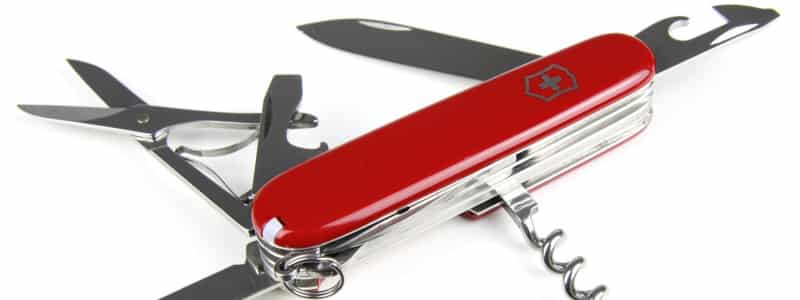
Victorinox brought action against B&F in 2013 for infringing on their intellectual property rights by making and selling multifunction pocket knives, known as “Royal Crest”, which were similar to the Swiss Army Knife.
B&F admitted that their knives are not of equal quality to the Swiss Army Knife.
The court pointed out that the similarities between both knives are “striking and telling”, and that there was an “overwhelming resemblance”. This causes consumer confusion, and on more than one occasion, a consumer has tried to repair a B&F knife at Victorinox.
The Red Mark
Victorinox has been using the Red Mark and the Swiss Army Trade Dress (which includes the red cover and multiple folding metal implements) for over 70 years.
In proving the distinctiveness of their Red Mark, Victorinox proffered evidence that they have spent over $50 million in advertising in the US, received extensive media coverage, produced consumer studies that showed a significant association between the colour red and the Swiss Army brand. Further, Victorinox has sold over 100 million Swiss Army Knives in the US since 1936.
B&F tried to argue that Victorinox took too long to sue
B&F argued in their defence that Victorinox had failed to bring the lawsuit in a timely manner, and that they knew of B&F’s use of its trademarks but inexcusably delayed in taking action. B&F stated that they have been selling the knives since 1983, and were openly advertised through catalogs, internet and trade shows. They claim to have sold 2,500,000 units since.
However, the court stated that B&F did not have ‘clean hands’, had intended to infringe on Victorinox’s trademark. As a result, they could not argue the defence that Victorinox took too long to sue.
It was not B&F’s first attempt at copying Victorinox’s products
It was pointed out that B&F had infringed on Victorinox’s trademark “Swiss Army” by describing their knives as a “Swiss Army Knife” in a 1987 catalog. They also sold a virtually identical watch, and even produced a knife with an embedded clock after seeing Victorinox’s.
Let us know what you think by tagging us @lawpath and/or #lawpath.
Find out more about trademarks here, and about IP Australia’s Trademark Facelift.
Want to get trademark protection for your brand? Start here or give us a call on 1800 LAWPATH.