

Dominic is the CEO of Lawpath, dedicating his days to making legal easier, faster and more accessible to businesses. Dominic is a recognised thought-leader in Australian legal disruption, and was recognised as a winner of the Australian Legal Innovation Index and recently a winner of the LexisNexis 40 Under 40 (APAC).
We’ve heard the stories about bad employees: the ones who are always late, the ones that don’t show up, the ones that don’t do any work. You have given your bad employee chances to change. After all, every one deserves a second chance. But this time, you’ve had enough. It’s time for them to go.
How do you fire an employee?
Most workplaces are governed by the Fair Work Act 2009 (Cth). Accordingly, there are several steps you, as an employer, are required to take in order to not be liable for unfair dismissal (i.e. dismissal in a harsh, unjust or unreasonable manner).
There are several reasons for firing someone, from serious misconduct (e.g. physical abuse) to poor performance.
In a few cases, having a summary dismissal with immediate effect for serious misconduct is possible. However, it is important to seek legal advice before summarily dismissing an employee to ensure you are within your legal rights to do so.
Most of the time, the reason you are considering termination is because of unsatisfactory performance. There are a few steps to take before you can effectively fire someone.
1. Having a chat
The first step you should take is to have a chat with your employee, voicing your view that his/her conduct is not acceptable and also listening to their concerns. You should encourage them to bring in a support person to represent or accompany them.
In this chat, you and your employee should reach a solution and reasonable steps for him/her to take to improve. You should also outline the consequences should your employee fail to improve in their conduct
You must ensure that this meeting is documented and signed by both parties. You can find meeting templates here.
2. Warning
If your employee’s conduct does not improve within a reasonable time, you should issue a warning to signal your intention to carry out the consequences. This warning letter should clearly detail the reasons for the warning and set clear expectations for what needs to be done differently.
You should clearly state the consequences if your employee does not improve their conduct, including the possibility of termination.
As there is no thumb rule for how many warnings you should give, you must ensure that you give the employee reasonable time to remedy their conduct. If unsure, seek legal advice.
3. Final Warning
Your employee does not improve, and you’re at your wits end. There are several things you should consider at this stage:
- Is another meeting going to be beneficial?
If not,
- Would adjusting the employee’s duties help the current situation?
If not,
- Issue a warning letter.
The final warning letter should detail the conduct your employee is required to improve on, setting clear expectations of what you want done.
The consequences of not improving should also be clearly stated.
4. Notice of Termination
Before terminating your employee, you have to look at the terms of termination in that employee’s employment contract.
The notice of termination can be delivered to the employee in three ways:
- personally;
- leaving it at the employee’s last known address; and
- sending it to the employee’s last known address by pre-paid post.
The notice period depends on two things: the employee’s employment contract and the National Employment Standards (NES).
If the notice period on the employee’s contract can be longer that the relevant standard in the NES, it can probably be relied on. It cannot be relied on if it is shorter than the NES period.
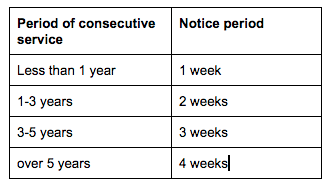
If your employee is over 45 years old and have worked with you for at least 2 years, they must get an extra week of notice.
See more here.
You will need to work out a reasonable final pay to the employee.
There are two avenues for termination at this point.
You can:
- allow the employee to continue working during the notice period; or
- not require them to work but pay them in lieu of the notice period.
Further, there are other aspects you need to consider when determining the final pay. These include:
- any outstanding remuneration owing;
- any accrued leave or long term entitlements; and/or
- any severance pay entitlements.
You can find the following documents at LawPath:
Formal Warning Letter (Unsatisfactory Performance)
Final Warning Letter (Unsatisfactory Performance)
Termination Letter (Unsatisfactory Performance)
Termination Letter (Serious Misconduct)
Termination Letter (Notice or Payment in Lieu)
Unsure where to start? Contact a LawPath consultant on 1800LAWPATH to learn more about customising legal documents, obtaining a fixed-fee quote from our network of 600+ expert lawyers or to get answers to your legal questions.






