
If you have a passion for music, starting a musical instrument business is the perfect opportunity for you to carry out your interests and make money at the same time. Just imagine getting to enjoy your “working” day by sharing your knowledge and passion with each customer that walks through the door. It’s so exciting yet many people simply don’t know where to start.
Let’s break it down into 6 easy steps to help you get started.
Step 1: Choose your musical instrument business structure
There are three main types of businesses in Australia:
- Sole trader/proprietorship
- Partnership
- Company
There are unique advantages and disadvantages of each type of business. Read How to Start a Business to study its different tax obligations, rights and fees. Now choose the structure that most accurately represents the type of music instrument business you wish to succeed in.
Step 2: Create a business plan
You need a clear business plan to start a musical instrument business and succeed as an entrepreneur. First, start by mapping out the specifics of your business. The most important points to consider are:
- Who’s your target market?
- How will you reach them?
- What’s the name of your business?
- What are the startup costs?
- What are the ongoing costs?
- How much will you charge customers for each product or service?
- Who will be your suppliers?
These questions are only the basics! You should have a detailed answer to each question to start off. Remember, you should also ensure to comply with the legal requirements under ASIC.
Step 3: Make an online store
There is no denying that more and more businesses are moving online. Especially in the midst of the pandemic, you can assume a large proportion of your revenue is guaranteed to be generated from online orders. So a website is a must. You can have both an in-store and online business and exploit the benefits of both!
A website can be a convenient method for customers to easily browse your products and services. Ensure your business policies and terms and conditions are in a prominent place on your site. Use a unique logo, colour scheme and packaging to differentiate yourself from the competitors.
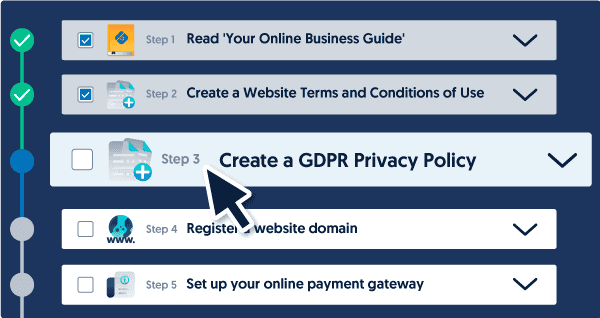
Do you want to start your own website?
Use our ‘Start a Website’ workflow to complete and check off all your legal requirements.
Start nowStep 4: Register an ABN
You must register your business to secure your business name and your unique Australian Business Number (ABN). It can be daunting to be all on your own and trying to research how to register your business by yourself. Click here to easily register your business online.
Step 5: Advertise your business effectively
Put your business name out there. How else will you stand out in the crowd amongst all your competitors? Consider marketing on sites such as Google and popular social media platforms. You can also consider reaching out to famous music websites to directly reach your target market. Work with your local music teachers and offer special deals to their students.
You can read more about the 5 Ways Your Business Can Use Social Media Effectively.
Step 6: Create a customer loyalty system
When your customer makes his or her first purchase, this is just the starting point of your business. You have to follow through or provide that customer with an incentive to return to your store. Maybe you can consider setting up an accumulative points system where each purchase gives customers proportionate points. When they reach a certain number of points, give that loyal customer a discount.
Key Takeaways to Start a Musical Instrument Business
A detailed business plan can be time consuming but it’s really the most important step in setting up a business. Take advantage of the power of social media, online orders and advertise your business to your target market. You have to put your business name out there for you to be able to secure your first sale. But remember, it doesn’t stop there. Set up reward programs to create a strong community of loyal customers and help your business succeed.
Now, get to work!