
What does Australia import?

Table of Contents

Share at:

As a medium-sized economy but also an island continent, it might be surprising to know that Australia has historically had a trade surplus (that is, we export more than we import). From the early days of bringing in convicts, mutton and anything else that would keep the colony alive, to a modernised and globalised economy, it’s interesting to note what is now inside those freight containers arriving on our shores.

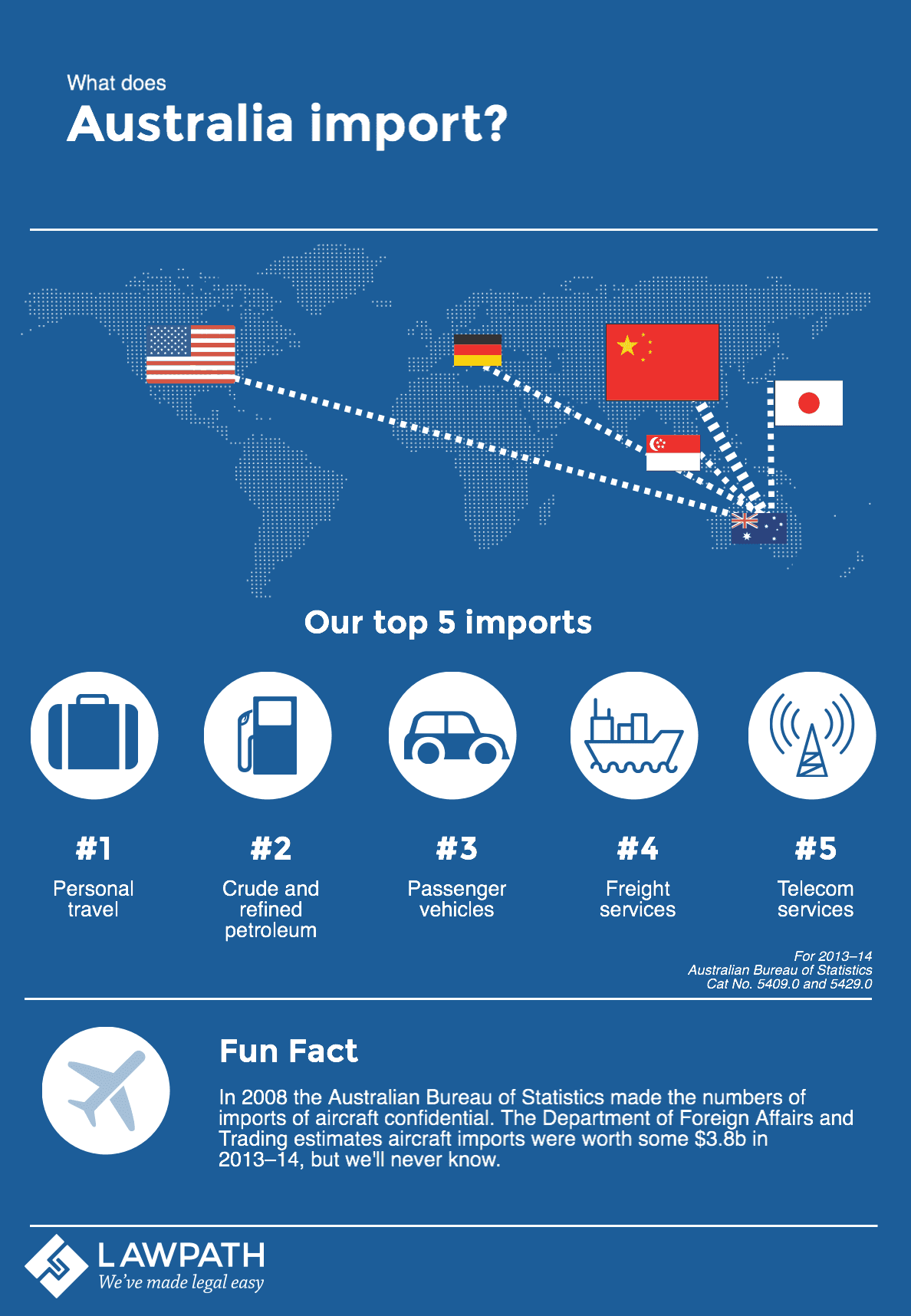
In 1906, when the Australian Bureau of Statistics first started keeping records in leather-bound books, our main imports were of textiles and apparel as well as manufacturing equipment, a good reflection of our economy at the time. Our economy has now shifted, especially with the post-war boom, to a more soft labour and professional services economy. The infographic below shows you what our imports are in 2013-14:
australian-imports

Where to from here?

In the top 5 imports, crude petroleum experienced the biggest growth in 2013-14, followed by personal travel. As the economy continues to shift away from manufacturing and pivots towards Asia, it is likely that finished products, such as vehicles and telecom equipment, will continue to increase and dominate the imports list.

The composition of our imports might also change as the recently negotiated Free Trade Agreement: for more on this, see our article on it.

Let us know your thoughts on Australian importation by tagging us #lawpath or @lawpath.

Share at:

Simplify creating legal documents today

Browse through Lawpath's AI tools which can be used to draft, review and refine legal documents today!

Related Articles

Company Setup Costs and Tasks in Australia for 2026-2027: A Simple Guide to Business Registration

Are you wondering how much it costs to start a company in Australia? Check out our detailed guide with pro tips inside!

When Are Employees Entitled to Paid Breaks?

Know your rights to paid breaks in Australia. This guide explains Fair Work rules for rest breaks (paid) vs. meal breaks (unpaid) to ensure compliance.

17 Changes Hitting Australian Businesses on 1 July 2026

What July 1 changes affect Australian businesses in 2026? Here’s what to know about super, wages, tax and compliance.

Do I Have to Pay Tax on Distributions From an Irrevocable Trust?

Understand how to pay tax on trust distributions. Ensure compliance and maximise your tax benefits today.

FY26 Dates: Key Deadlines and Milestones You Can’t Miss

Here is your guide to key tax dates in Australia. From BAS lodgement to tax returns, keep these dates in mind to ensure tax compliance.

How Asset Depreciation Works for Australian Small Businesses: A Complete Tax Guide

Confused about asset depreciation this EOFY? We’ve got your back. Our guide covers key rules for small businesses, so you can ensure compliance.