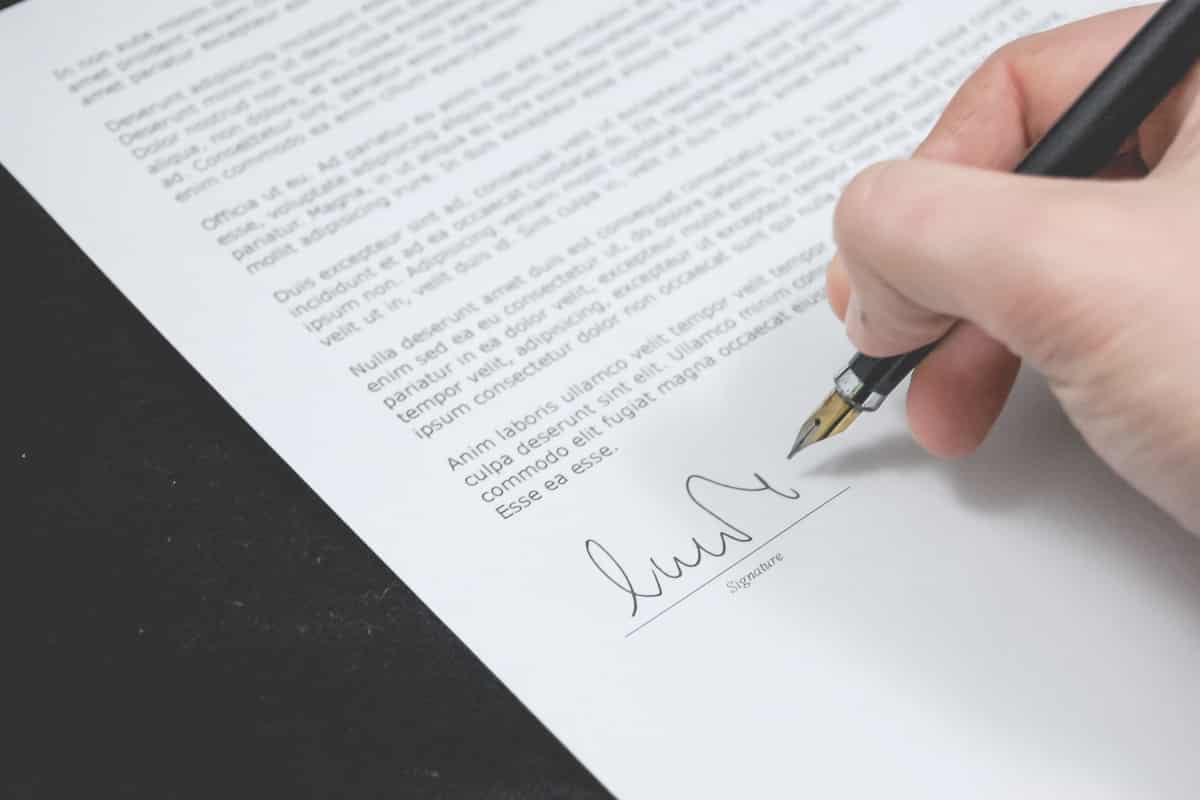
A statutory declaration is a written statement, which involves a person declaring that the statement is true. This is commonly done under the Oaths Act 1900 (NSW). However, there are two types of statutory declarations: State and Commonwealth. It must be verified and signed by an approved or authorised witness.
Now, who can witness a statutory declaration? You’ll never know when you may need to get certain documents or statements verified.
Keep reading below as we take you through who can be a witness and other key information!
Reasons for having a statutory declaration in the first place
As mentioned earlier, a statutory declaration is a document that you swear to be true.
These particular documents can also be used as evidence, so it’s vital that they’re accurate and not misleading.
It’s important to note that there are consequences if you provide a false statement. You can be charged with a criminal offence under Section 678 of the Fair Work Act 2009 (Cth).
Many people may need a declaration for one or many of the following reasons:
- To confirm personal details;
- Financial related matters;
- Health matters; and
- Evidence for sick leave.
Let’s move on to the requirements of witnessing statutory declarations.
Requirements for state and territory witnesses
An authorised witness for State and Territory declarations must come from one of the following categories:
- They are 18 years or older and on the list of approved witnesses
- The witness has a ‘connection to Australia’, meaning that the person is a licensed or registered professional in Australia, such as a doctor, lawyer of the Supreme or High Court OR a chartered Australian and New Zealand accountant.
- They are a Notary Public of the common law; or
- Justice of the Peace (JP).
You may also have an ‘approved witness’ who can be:
- A family member;
- A friend; or
- A person who is related to the content within your proposed statement.
Requirements for commonwealth witnesses
You’ll need a Commonwealth statutory declaration for matters related to the Commonwealth, ACT, and smaller territories.
Anyone from minors to retirees and officeholders can make a declaration. Some organisations, however, may not accept witnesses under the age of 18.
Companies also can’t make statutory declarations, but a person from the company can. Examples of who can witness a Commonwealth statutory declaration under the Statutory Declarations Regulations 1993 (Cth) are:
- Australian diplomatic officer;
- Bank officer with more than five years of experience;
- Chief executive of a Federal Court; and
- A Judge or Magistrate of a court.
Additionally, you can make a Commonwealth declaration if you’re overseas. You can find an approved witness through the Australian Embassy or High Commission.
Overseas witnesses and approved witnesses can charge a witness fee if they want to. However, note that a Justice of the Peace can’t charge a fee to witness your statement because it goes against their duties.
Who can’t witness my statutory declaration?
Knowing who can’t witness your declaration is just as important as knowing who can. Since this is a statement that you declare to be true, you can’t be your own witness, even if it’s your statement.
This applies even if you’re on the list of professionals who are approved, witnesses.
Another example is if an approved witness has retired and no longer works in the field, which originally came from the approved witness list.
A retired teacher, for example, can’t witness a Commonwealth declaration.
Individuals on the Supreme or High Court roll are exempted from this requirement because they are on the roll for life unless eliminated.
Can statutory declarations be signed and witnessed electronically?
Are you wondering whether statutory declarations can be identified, signed and witnessed electronically? The short answer is YES, they can.
The NSW government (gov) introduced it as a way for small businesses to handle legal documents with ease during the coronavirus pandemic.
Statutory declarations, along with deeds, agreements and powers of attorney, can all be remotely witnessed electronically through an audio-visual link in NSW.
The same applies in Victoria (VIC), where a statutory declaration can be made in the presence of an authorised witness over an audio-visual link.
If you want to use this procedure, keep the following things in mind:
- The witness needs to observe the signatory signing the document in real-time
- The witness needs to confirm the witnessing by
- Signing the document or a counterpart of the document; or
- Countersigning a copy of the document signed by the signatory
- As soon as practicable after witnessing the signing
- The document the witness signs is the same document signed by the signatory
- Stating the method used to witness the signatory’s signature
- Make sure the document was witnessed per section 14G of the Electronic Transactions Act 2000 (NSW)
Frequently asked questions (FAQs)
Is there a list of approved witnesses who can witness my statutory declaration?
Here is the list of persons who can witness your statutory declaration if they are licenced in Australia or if they are registered to practice their work in Australia
- A non-commissioned officer
- Australian Consular Officer or Australian Diplomatic Officer under Consular Fees Act 1955
- Bank officer with 5 or more years of continuous service
- Chief executive officer of a Commonwealth court
- Chiropractor
- Credit union officer
- Legal practitioner, with or without a practising certificate
- Marriage celebrant registered under the Marriage Act 1961
- Medical practitioner
- Member of Engineers Australia but not a student
- Member of the Australian Defence Force
- Minister of religion registered under the Marriage Act 1961
- Optometrist
- Patent attorney
- Permanent employee of a Commonwealth authority
- Permanent employee of a local government authority
- Physiotherapist
- Police officer
- Trademarks attorney
- Veterinary surgeon